
Not afraid
of the new.
Around 2017 a Swiss goldsmith opened a tablet in front of a schoolgirl and showed her a ring you could turn, with a diamond whose colour you could change. Then he asked her: "Do you want to start learning 3D?"
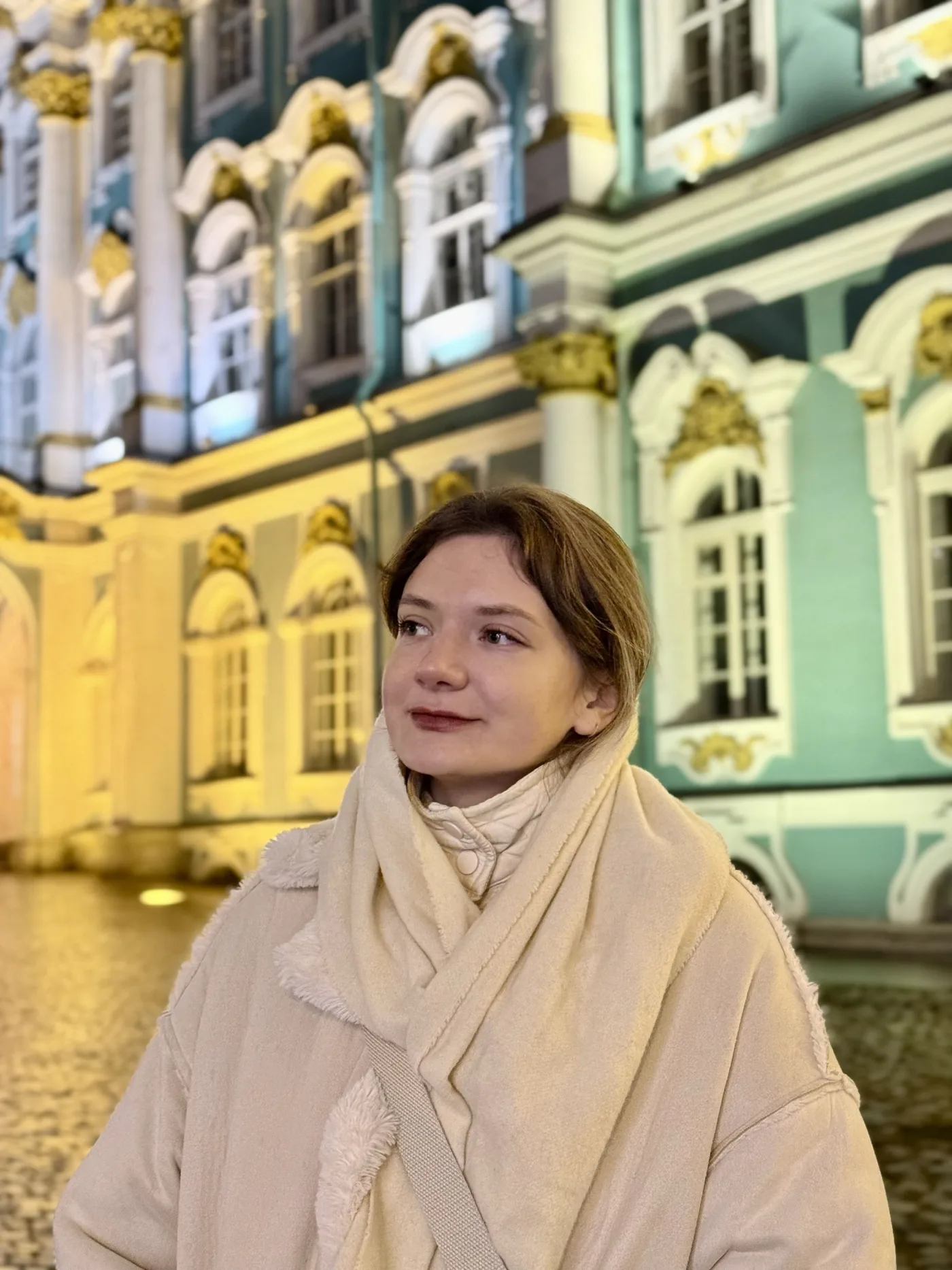
Not Afraid of the New: A Conversation with Dasha Razumova
Five or six buildings and a forest
Dasha just said "maybe", and that was it. But she got curious and started watching YouTube tutorials on how to model in Blender. Nine years later Dasha Razumova is Product Designer at iJewel3D.
She was born in Saint Petersburg. When she was small the family moved out of the city to a village near Vyborg, about two hours' drive from the Finnish border. The village was five or six large buildings and a scatter of small houses. Her memories of it are outdoors.
"I remember the forest. We often went walking there to pick wild blueberries. Mushrooms. All that kind of stuff."
The Baltic was nearby. Its water is not really salty, and without the salt there is nothing holding you up, so swimming in it is harder work than in a salt sea.
Winters were mild, usually around minus 10, but the rule was firm. School was only cancelled below minus 25. Sometimes it dropped to minus 20 and she still had to go, walking to class wrapped in everything she owned and changing clothes once she arrived. Indoors it was warm, heated by hot water running through pipes to every house. Cold was a thing that happened outside.
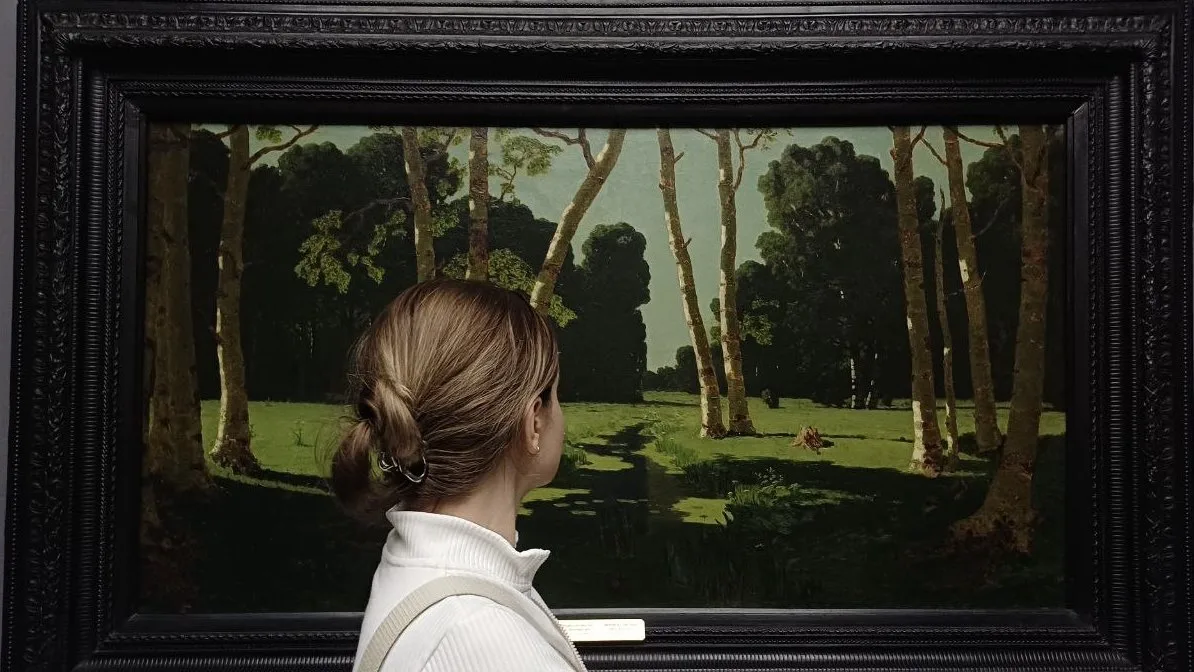
One week of holiday
She lived in Russia until she was eleven. Then her mother bought cheap tickets to Bulgaria for a holiday. They stayed one week. Her mother decided they were moving.
Four months later the apartment in Russia was sold, another one in Bulgaria was bought, and they had gone. The reasons Dasha remembers are the people and the atmosphere, and that her mother thought it was a better place to raise two daughters.
She arrived without the language and went straight into a Bulgarian school. For the first stretch she sat in lessons mostly because school is school. The one subject she could not follow at all was Bulgarian itself. Everything else she caught from context. The two languages are close enough that she understood about half of what was said around her, and it took about a year before she could learn in it rather than around it.
The first thing that surprised her was not a word at all. It was a gesture. In Bulgaria a nod means no, and shaking your head means yes.
A class that needed students
Her mother played cello and piano, so Dasha studied piano in Russia and kept going in Bulgaria. The school she entered there was a national school for music and stage arts, twelve grades of it, and she was accepted on the oboe. She started it from scratch and it went well.
The turn came at thirteen, and it came from someone else's problem. Her art teacher was opening a new computer graphics specialty at the school and needed students to fill it. She asked Dasha if she wanted to try. Dasha had barely drawn before. She preferred math because she felt she had more of a logical mind.
"I had never really drawn before. I liked math more, and building Lego. And then I tried drawing. Actually, it was good."
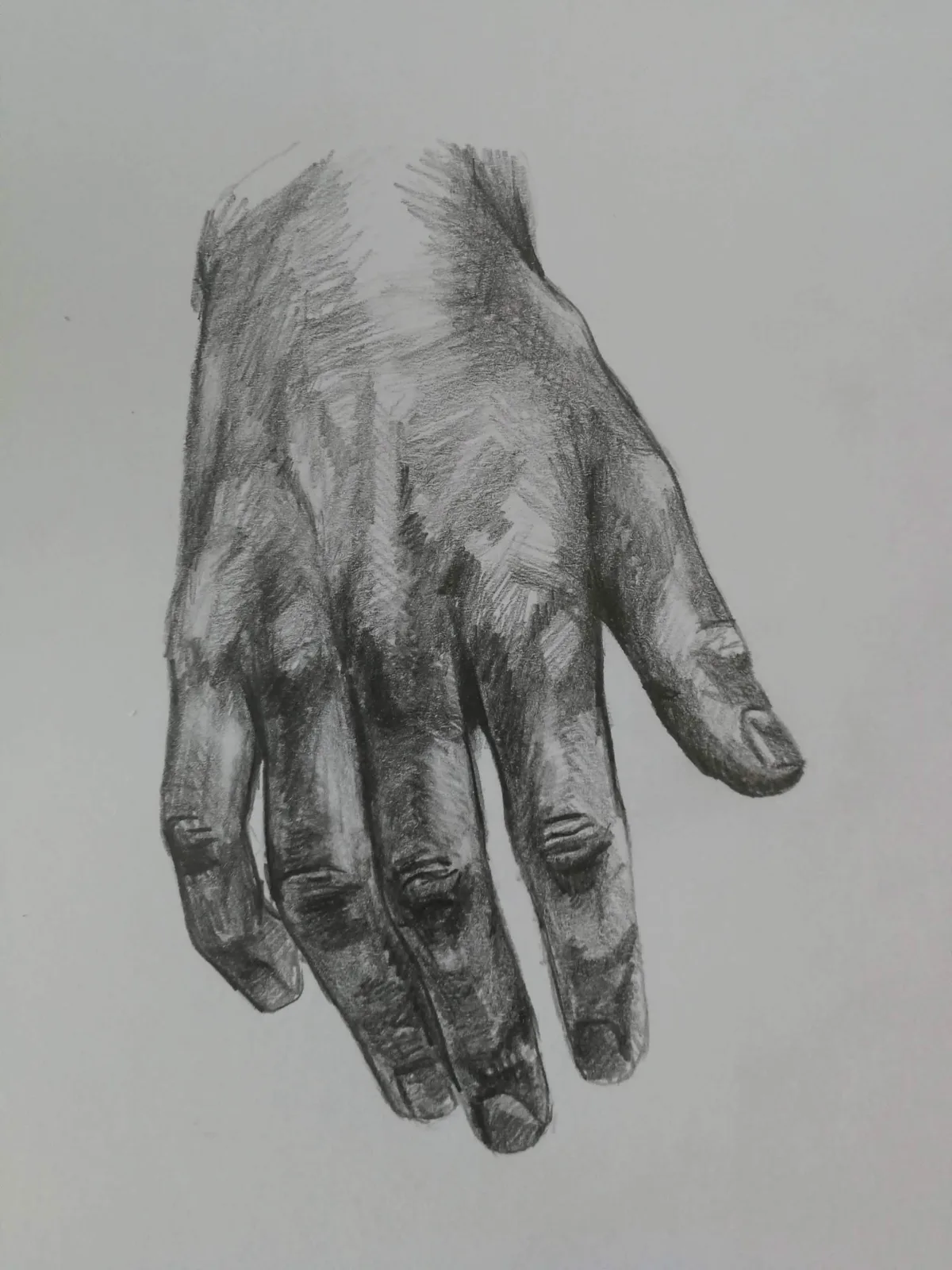
It went fast. Five years followed: academic drawing on one side, Illustrator, CorelDRAW and Photoshop on the other. From thirteen to eighteen, that was the work.
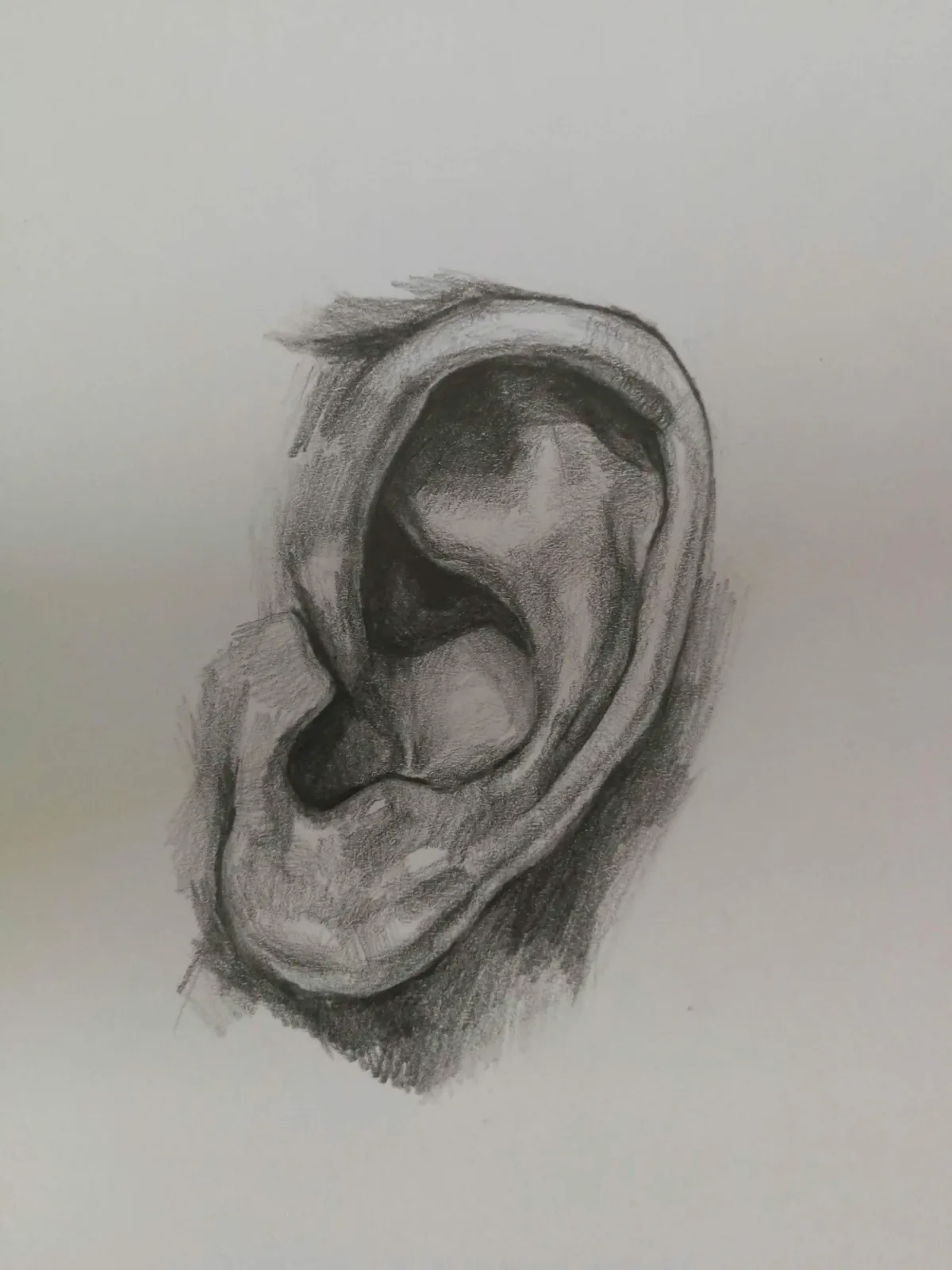
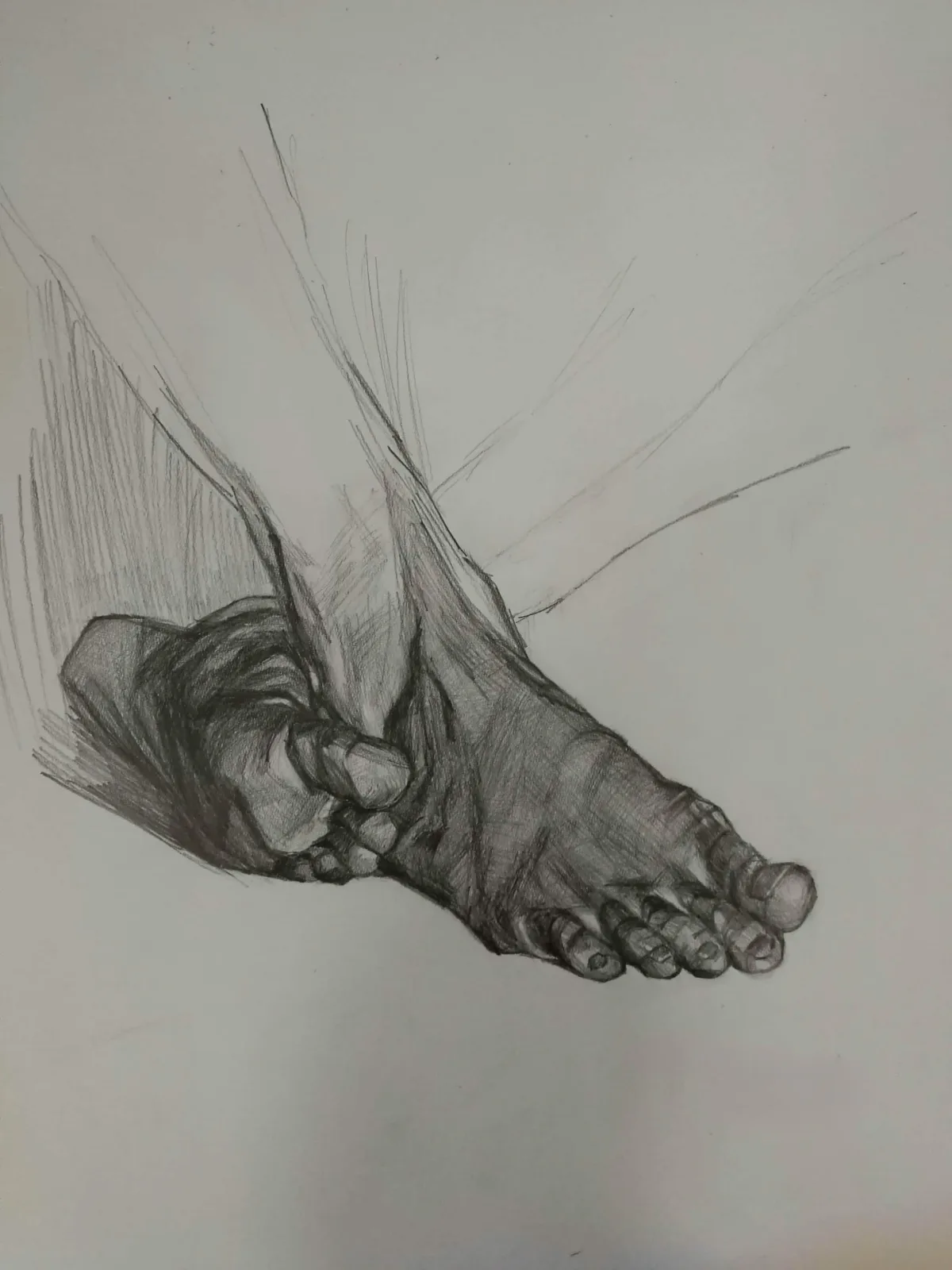
An ear, academic drawing
A hand, academic drawing
Feet, academic drawing
The ring on the tablet
The person who opened that tablet was Robert Thomi, a Swiss goldsmith who worked years in the trade and then moved to Bulgaria, where he and Dasha's family met and became friends.
It came out somewhere in the middle of those five years, at one of the family's meetings. On it was his own configurator, built to order and paid for out of his own pocket because he wanted the thing to exist. It was early, and its limits were obvious: one ring, round diamonds, a colour switch. He asked if she wanted to learn 3D to create beautiful things like that.
Until that question she had never thought about 3D. After it she started looking at what such things get made in. Blender was the one she could use, and it was free. None of it was leading anywhere in particular, so she watched tutorials on YouTube the way you watch anything, for fun, in whatever hours were left over.
About a year after those videos, the work came to her. Robert knew what she was studying, advertising and computer graphics, and asked whether she could do a few small jobs for him. She said yes. Small things first, like SVG icons for a little configurator with colour options. Then icons for diamond shapes, one per shape.
Three of the shape icons Dasha drew.
Sixes, then everything closed
2020 was exams. In Bulgaria the marks run from 2 to 6, and 6 is excellent. She took sixes in everything. In Bulgarian, a language she did not know at all seven years earlier, she got 5.60, which also counts as excellent.
Art history was the hard one: around 600 artworks to memorise with their artists, eras and periods, and a major essay on top. That went the same way.
The country had already closed by early spring, before she was through with school, so there was not much to choose between. School ended at the very end of spring, and from that summer on she was simply working, taking whatever there was. Business cards, flyers, some clients passed on by Robert. A hotel job meeting guests and preparing rooms, at the same hotel where her older sister Masha is an administrator.
The first big project
In 2021 there was a call with Robert and one of the people who would later found iJewel3D. The company did not exist yet. It was Dasha's first work meeting in English, and that was the hard part. She had barely practised it, and languages, she says, are not her strong side.
They spoke that once and then not again. For years afterwards Dasha had no contact with the team at all. Robert did, and everything reached her through him.
The project that came out of that call ran about two years, and it was her first big one. At the start she was more of a tester: trying the software, creating basic materials. Around 2022, as she learned more 3D, she moved on to real models for it. Materials, and then the separate parts of a ring, the small repeated elements that get copied around a band to build a pattern. Unit cells, in the language the engineers use. She was building them one at a time.
Robert kept sending her work of his own alongside it. Whole jewellery pieces, which was also his way of finding out whether she could do them. He gave her a reference image, she built the ring from the image in Blender, and she learned the program directly on the job.
Blender let her keep the files very light while they still looked good on the web. The first models took her many hours. She kept cutting the time down, model after model, until a whole new ring was half a day of work.
Asked what her style is, she gave the shortest answer of the interview: "I like simple, minimalistic style."
A company, and a job inside it
For those first years there was no company to work for, only projects. Something needed doing, Dasha did it, then the next thing.
That changed in January 2024. The company was founded and she was formally offered a designer position. She took it.
Once she was inside the company she was using English every day. It still does not come easily.
"I understand really well. But I don't have enough practice speaking, so I make a lot of mistakes. I know I make a lot of mistakes. But it doesn't matter."
What she took on at the start was what she already knew: visualisation. Jewellery renders, scenes, the pictures that make a piece look like itself. Then the scope widened. Video came into it, so she learned video editing too.
UI arrived the same way most things in this story arrive. It was suggested that she try, and she agreed. AI turned up at about the same moment and got the same answer. She tried it, and kept getting better at it.
A prompt instead of frames
Then the tools changed again, and this one she describes as a jump in speed. The old way of producing a UI was research, then creating frames, arranging their layout, and building components. Hours of it. Now she writes a prompt. It still takes time, but not that kind of time.
The prompt on its own is not the thing. She has built her own skills for UI work, and a brand kit the AI follows. The tool handles the UI well, and it can do research too. What it cannot do is the last part of the thinking. It can put a UX in front of her, and she still sits with it and works out whether that is how the thing should behave.
"If you want things done your way, you just need to build the skill. With that skill, you get what you want."
Her list of tools has grown the same way the rest of her story has. Illustrator and Photoshop at the start. Then 3D. Then Figma, then video editing. "I really grow up in the skills."
She was not sentimental about AI when we asked, and she did not defend it either. The reaction she sees around her is not fear, she said, it is anger, because some people have lost work. Her own question stays open: what will people do? She named a second cost too, and it was not about jobs.
"It makes it this way that you don't need to think. You just need to choose from many options. AI gives you variations."
She answered her own worry with history she has already lived through once. Everything used to be made by hand, then the computer arrived, and people learned to work with the computer.
"It's a tool. You just need to learn how to use it."
We asked whether any of this had ever felt like a job. She said no, and gave a practical reason rather than a romantic one: she works when she wants to work, and when she needs rest she takes rest. "I love working on different projects. We always have so many different things going on right now, and that makes it really interesting."
Paper and glue
Away from the screen she has always had hobbies. She did not draw as a child, but she made things with her hands, constantly. She swims, plays volleyball, and goes outside, on the grounds that the brain wants somewhere to go after a day of sitting still.
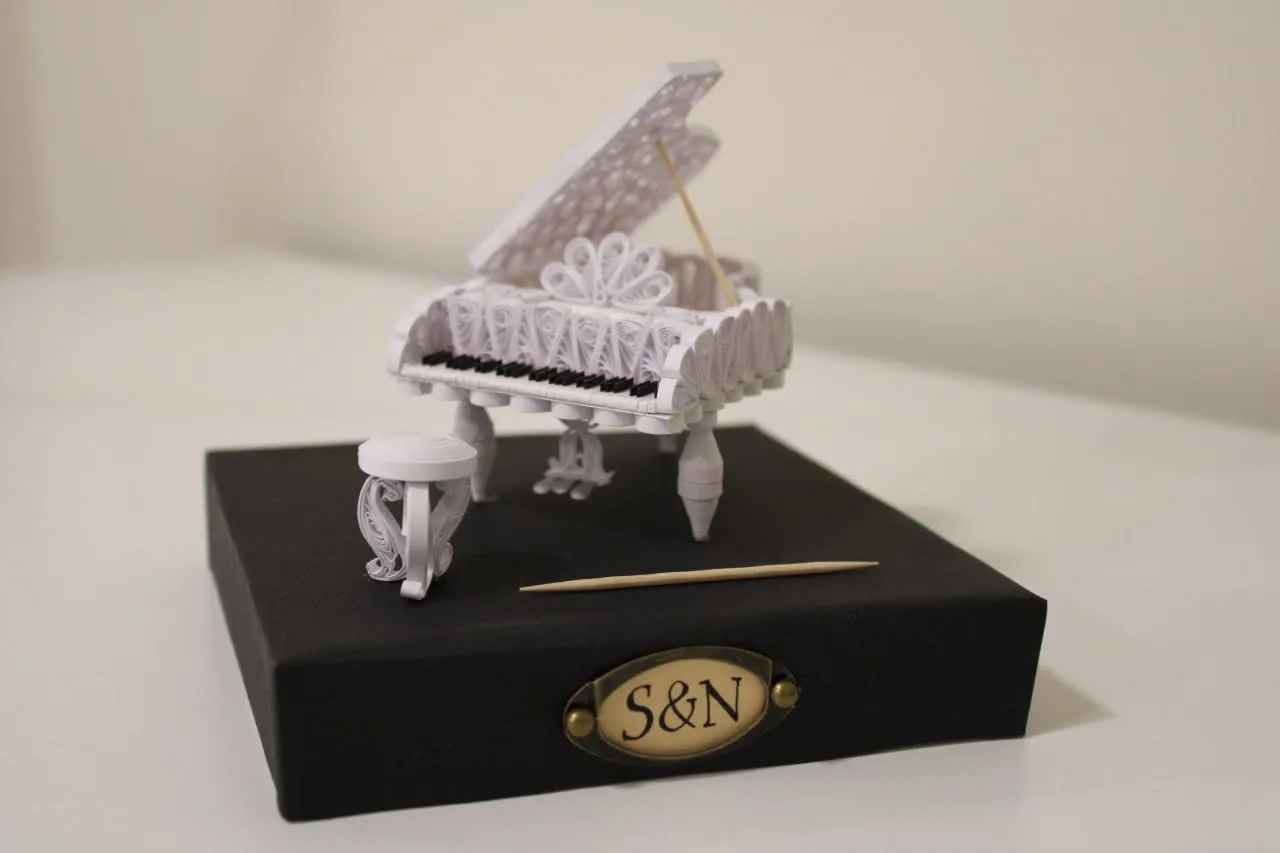
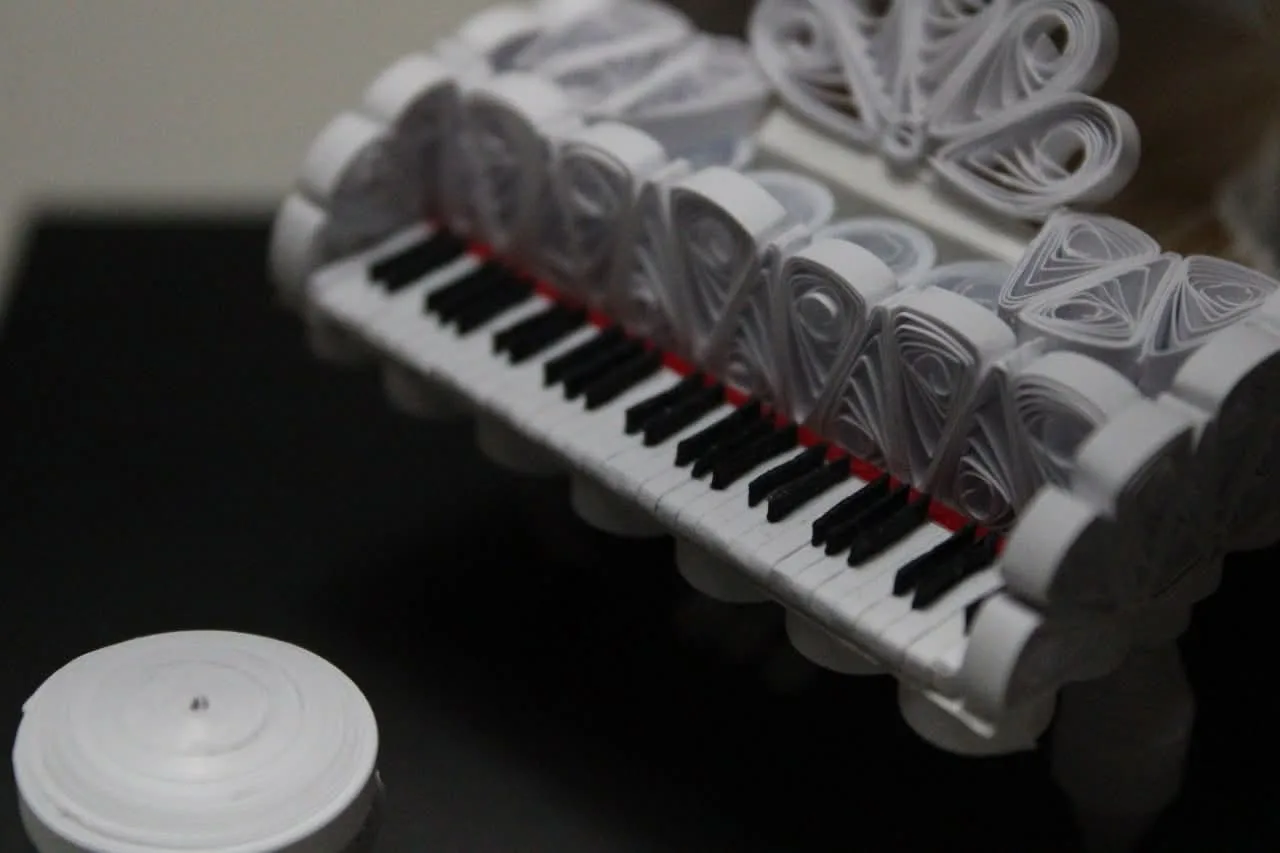
The one that stayed is quilling. Thin strips of paper, cut, rolled up with a special tool, and glued to each other. Paper and glue, and that is the whole material list.
What she likes about it is what she liked about Lego: everything is assembled out of small parts, and out of those parts you can build almost anything. Flat pieces that go onto a greeting card. Flowers. Animals. A grand piano. She has made a lot of the three-dimensional ones.
The piano is one of her most recent pieces. About twenty hours of handwork.
Say later, or maybe
At the end we asked the question the series always ends on. Looking back from the village to now, what was the driving force? She did not need to think about it.
"Not afraid of the new. I never say to myself, you can't do it. I just try. If it turns out bad, you tried. If it turns out good, you did it. If it turns out great, you did it too."
Then she added the rule underneath the rule. "Not to say no to anything. Say later, or maybe. Not no."
Two rings
Ask Dasha what she actually makes and the honest answer is a file. Here are two of them. Drag them.
Emerald Ramona
A photograph of a ring answers one question, from one angle, under one light. This one answers the rest of them.
What Dasha made here is the scene: the materials, the lighting, the leaf it sits on, green against green. The picture is the part most people never think to make.
Eternity
This one is hers from the beginning. She built it in Blender, and it weighs very little, which is the whole point of a ring that has to load in someone’s browser.
One she staged, one she built from nothing. Both of them you can pick up and turn.