
Selling a ring
before it exists.
One imagined ring, followed from a photo on a phone at the counter to the casting floor, using what the man who trains people on the software told us.

Selling a Ring Before It Exists: A Look Inside CounterSketch
What is CounterSketch and how does parametric jewelry design work?
A customer walks into a jewellery store with a photo on their phone and a rough idea. The ring they want does not exist. Nobody has cast it, nobody has stocked it, and the person facing them across the counter is usually a salesperson, not a designer. Everything that follows is one question: how fast can that idea become something the customer can see, price, and agree to?
CounterSketch, made by Gemvision, is built for that moment. It is parametric design software: every ring in its library is a rule set that can be reshaped at the counter, priced live, and sent straight to manufacturing. We spent an hour and a half with Beau Vallot, who manages training for it. Quotes are his, lightly edited for clarity.
Days become hours
Before CounterSketch existed, the customer in that doorway had two possible answers, and both were slow. The jeweller could draw the ring by hand, or model it in professional CAD, which takes real time and real skill. Either way the customer went home and waited days.
CounterSketch was the idea of Jeff High, who founded Gemvision, and Matt Stuller. Beau states its result in a single line.
"It took the time for customer approval and drastically reduced it."
The catalogue moved into the software with it. Stuller's adjustable findings and mountings were turned into parametric models, so a store sells from a library it does not stock. "You don't have to have a vast display or showcase of physical inventory. You have all of these digital assets."
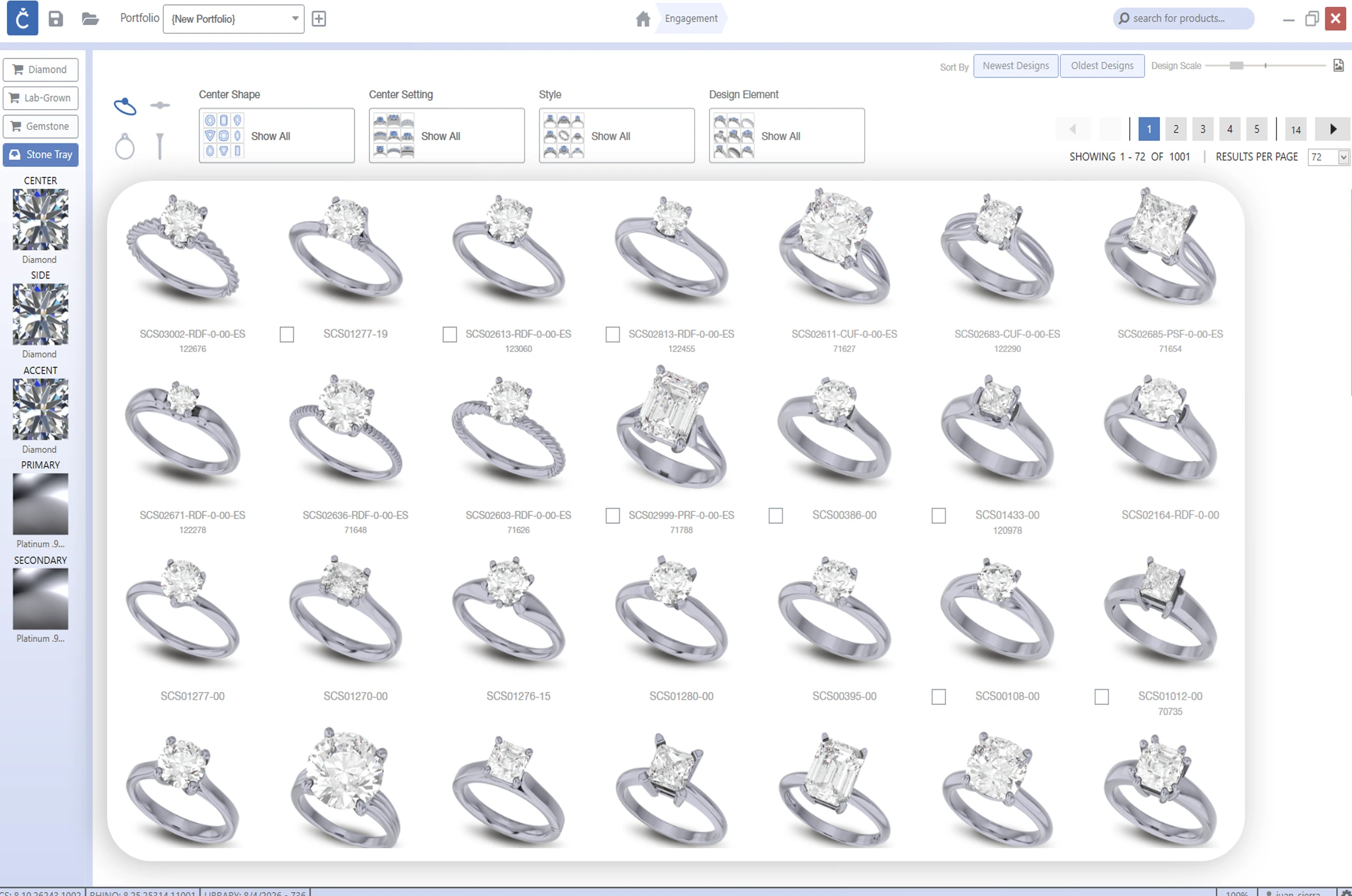
One model, three stones
A parametric jewellery model is not a shape, it is a rule set. One model holds every finger size, every stone shape, every millimetre size, and the difference between casting in platinum and casting in gold, all linked so that changing one thing correctly changes the others.
"Customers would be flabbergasted because of how much data is actually behind a single parametric model."
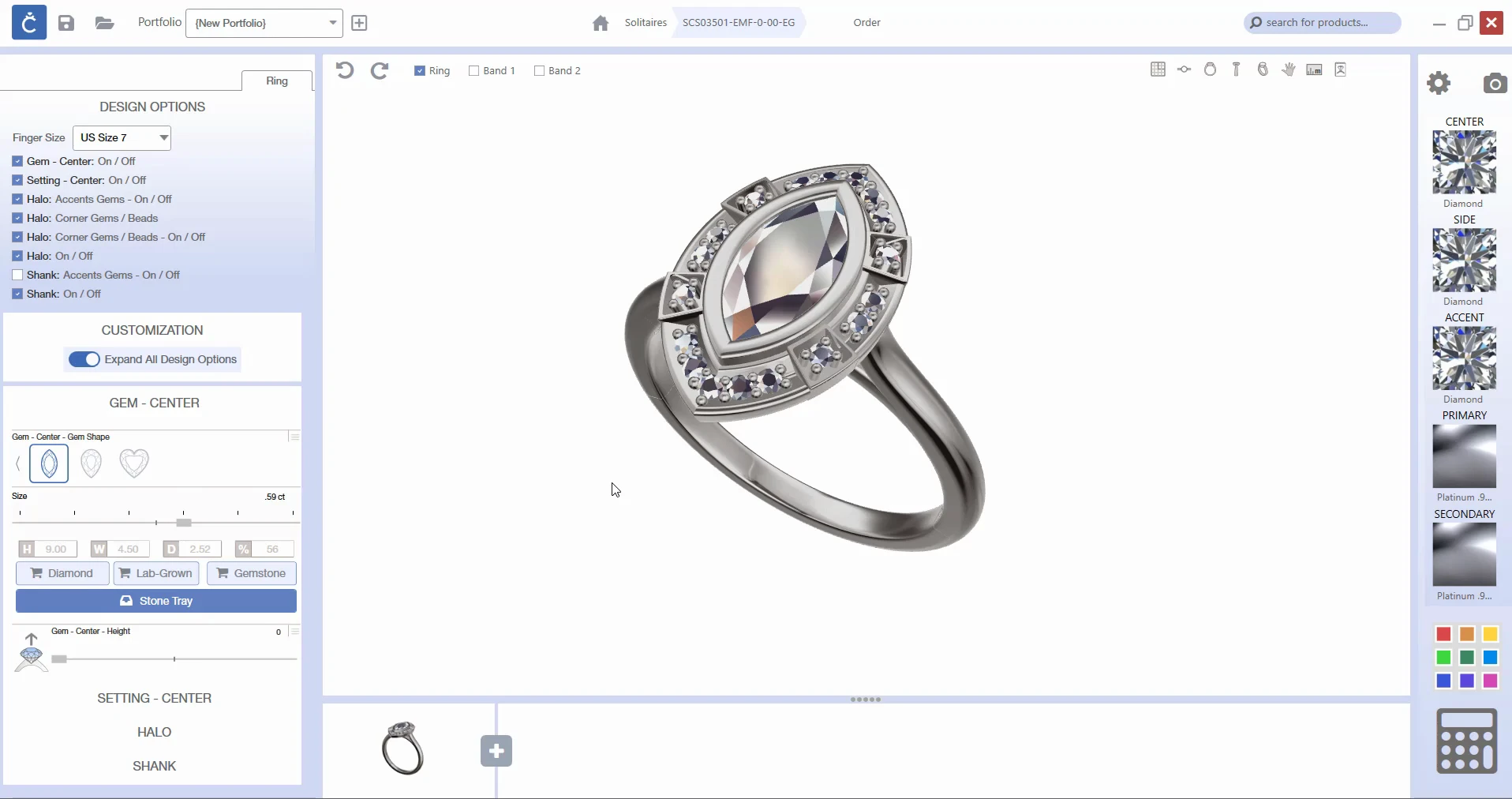
None of that reaches the counter. What reaches the counter is a click. "If the base model opens up with a five millimetre round, I can go in and say, oh no, I want it marquise. And the halo would update. The head would update. The shank touching the halo would update."
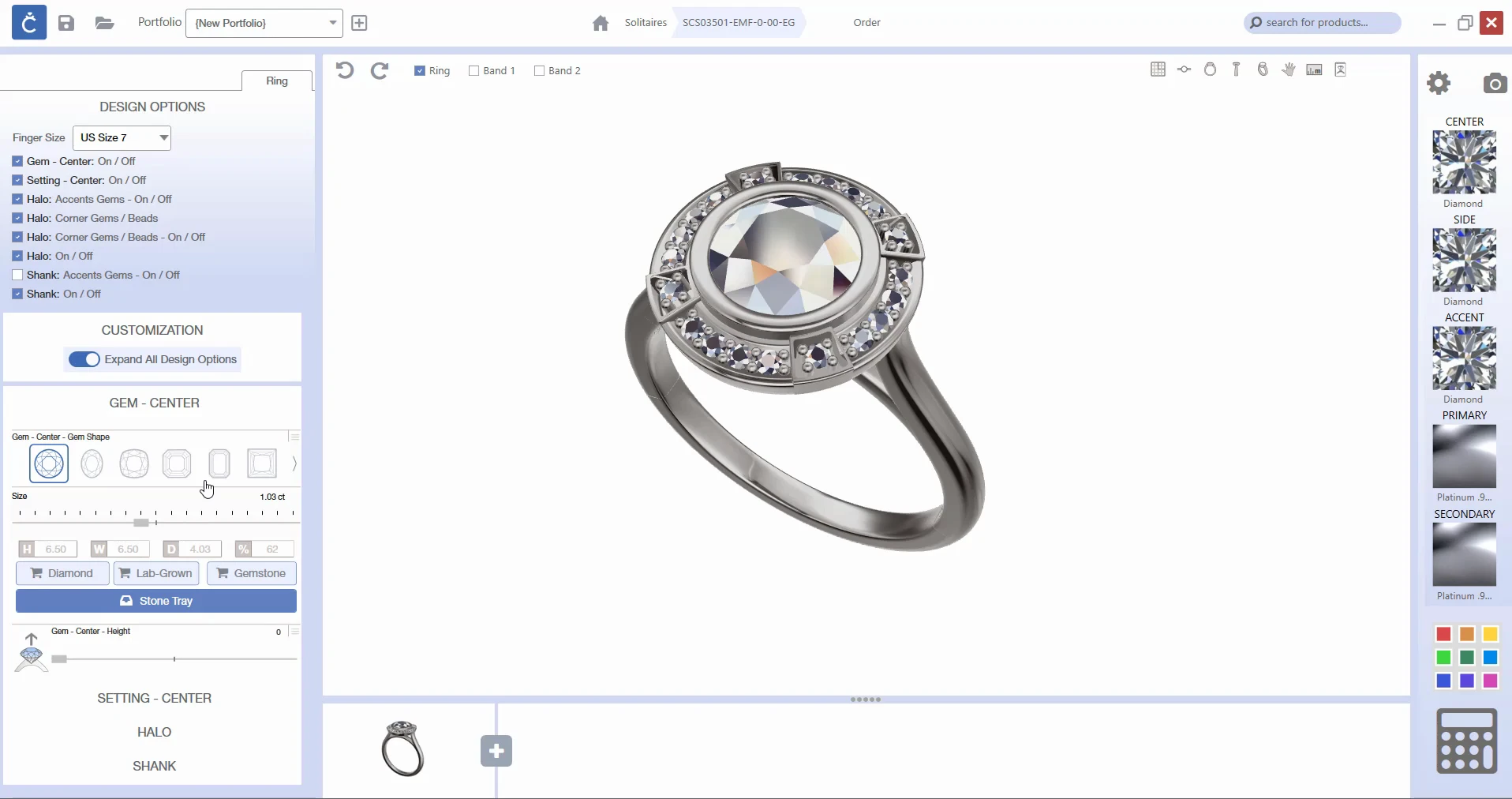
Round, 5 mm
The base model as it opens, inside the CounterSketch session.
Marquise
One click in the gem panel, and the halo, head and shank have all changed.
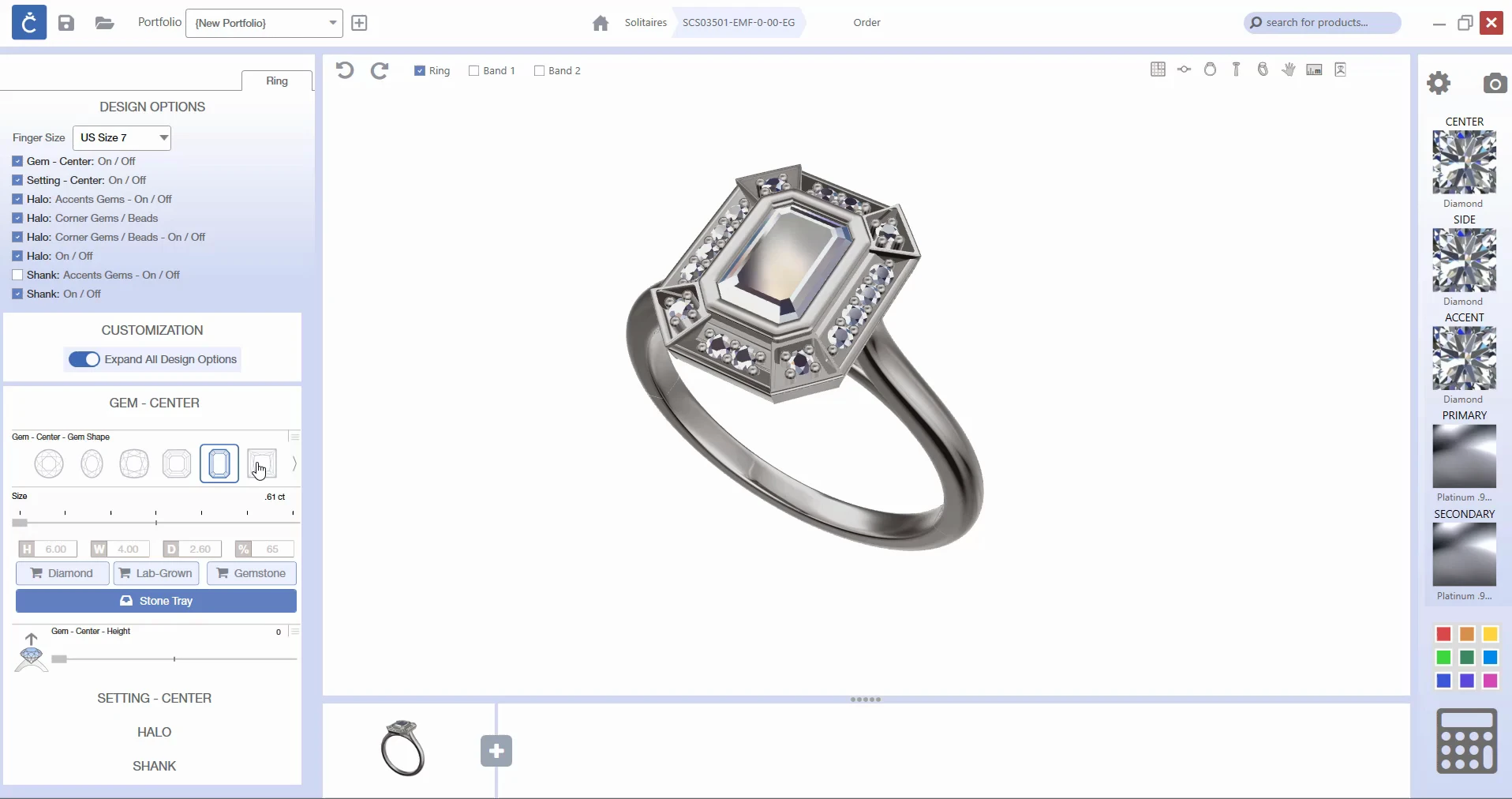
Emerald cut
A third stone, same model. The rule set does the work the CAD operator used to do.
Round, 5 mm
The base model as it opens, inside the CounterSketch session.
Marquise
One click in the gem panel, and the halo, head and shank have all changed.
Emerald cut
A third stone, same model. The rule set does the work the CAD operator used to do.
When the library falls short, a second library called Freehand supplies parts: heads, scrolls, flowers, animals, placed anywhere on a design. Anything still missing can be modelled in Rhino or MatrixGold and imported as a user part. Count the combinations across all of it and the number stops meaning much. Beau hedges it himself: something like three or four trillion iterations, and then, a beat later, "I can't even fully grasp that."
The session, with the customer watching
Most users are retail jewellers: single stores, small chains, concierge jewellers who meet clients with a laptop in a coffee shop. Usually the sales staff run it, not designers, "because they're the ones that are going to be boots on the ground on the front line with the end consumer."
The salesperson searches the library, opens something close, and adjusts stone shape, carat, finger size and proportions while the customer watches. Live pricing runs alongside, using the store's own markups, so a number exists as soon as the design does. If the store has a printer, a prototype can be in the customer's hand in fifteen or twenty minutes.
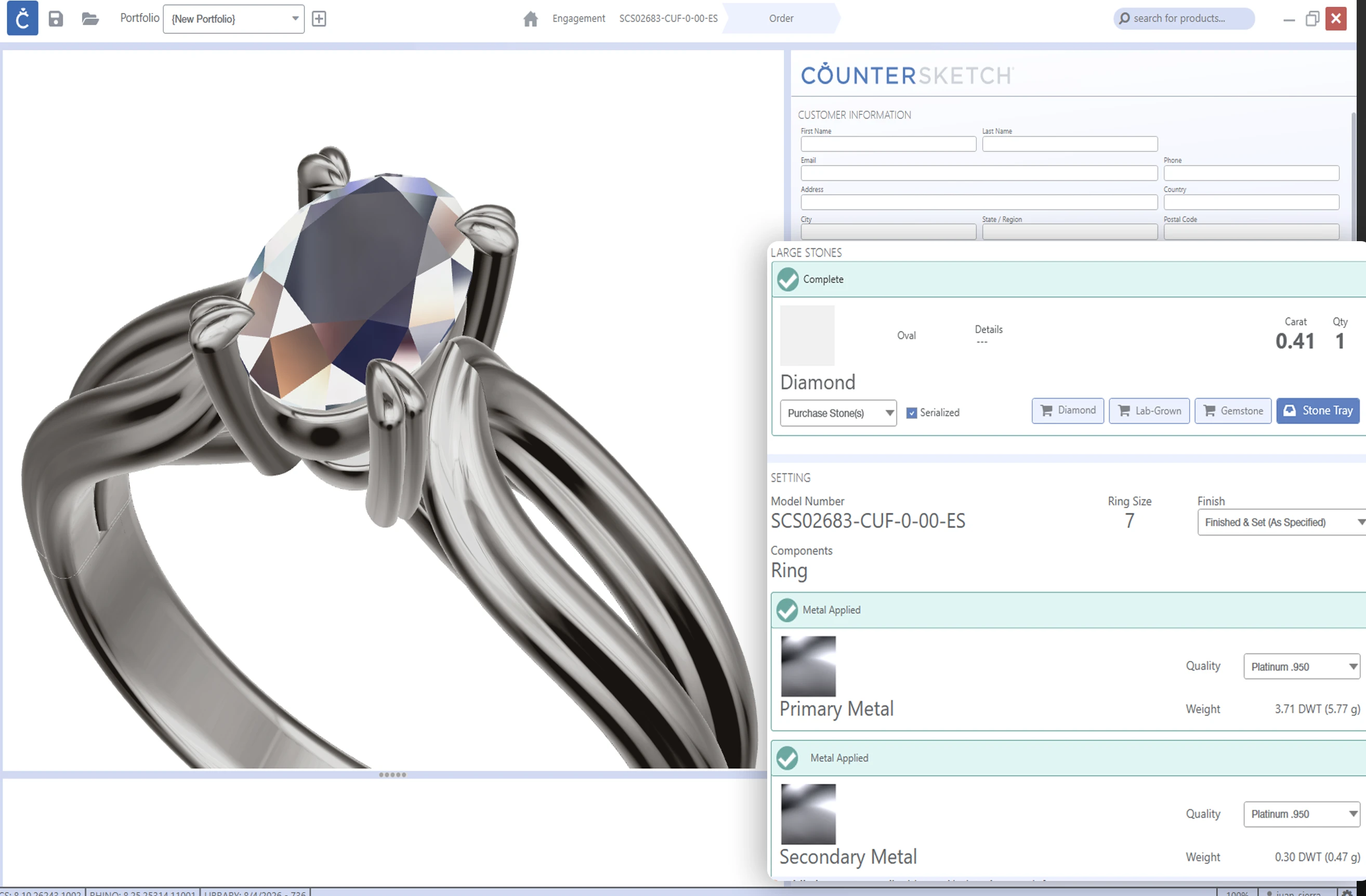
A buyer with a hand in the design will eventually ask for something that cannot be made. So the models carry manufacturing limits inside them, a minimum thickness being the obvious one: "So it doesn't set the expectation with the end consumer that's not feasible in manufacturing."
From yes to the casting floor
The whole path, from the counter to the finished ring, runs in five steps:
- The customer selects a base parametric mounting.
- The salesperson updates the stone shape, finger size, and metal options live.
- Live pricing updates based on the retail store's markups.
- The file is sent to the CAD/CAM team.
- The automated manufacturing process opens prongs and channels for casting.
That highlighted step is worth a pause. In CounterSketch, prongs sit folded and channels sit closed. Manufacturing opens them: "All the prongs are folded, all the channels closed. Then we hit a button and the prongs pop up." The same pass widens tight channels and softens sharp interior angles, because a thin fin of investment between two walls has to survive molten metal arriving at speed.
"That heavy gold will come in and hit that little fin and it'll break off and relocate. And it messes the casting up."
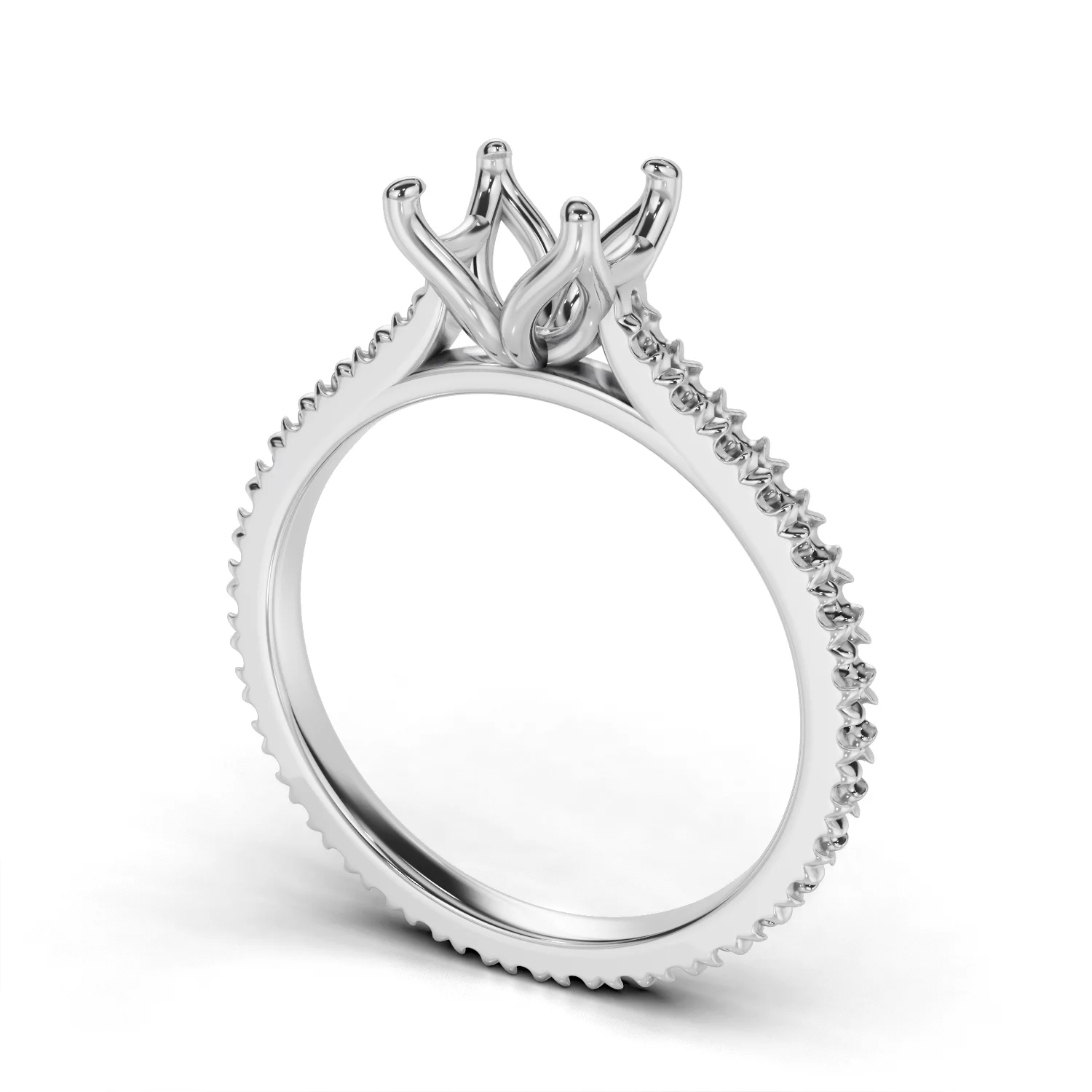
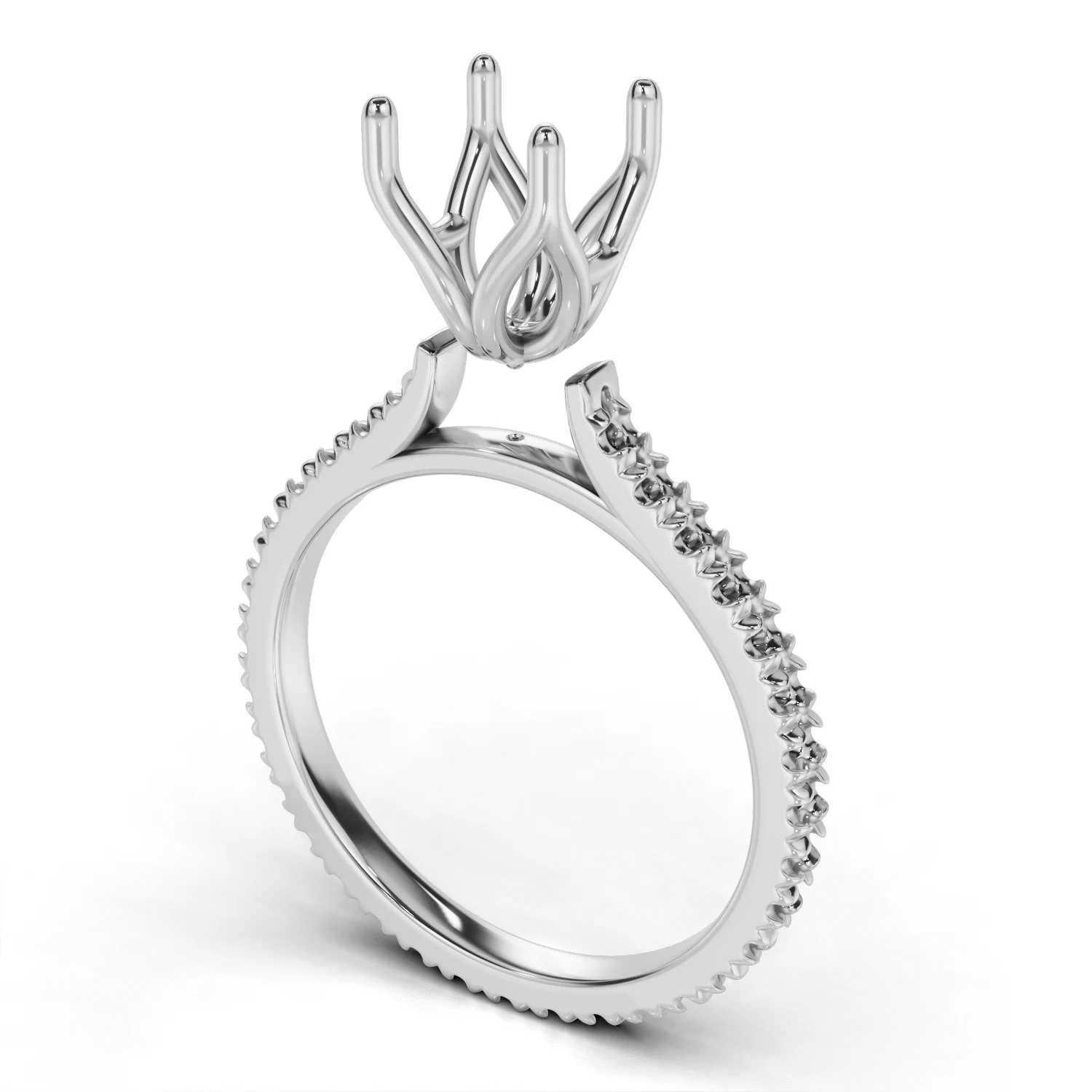
Beau does not oversell the result: "For the most part it works. There's always the fringe cases, but, you know, eighty twenty." The finished ring then goes to the retailer, who inspects it before the customer ever sees it. The store that sold the ring is the last pair of eyes on it.
The gap no configurator closes on its own
Which leaves the one thing none of this fixes, and it is where we started: a person being asked to believe in a ring that does not exist yet.
"One of the hardest parts is getting the customer to use their imagination. I see it on the computer screen, but what's it going to look like in real life?"
The printed prototype exists for that gap. So do renders, and the real time viewers and AR views that have grown up around this part of the trade, ours included. None of it decides anything by itself. At launch, CounterSketch gets the same door MatrixGold has: one button, and the ring opens in an iJewel viewer window, where the customer can turn it.
A ring you can turn
The same ring, turned by the customer. Drag to rotate.
This is the gap the printed prototype exists for, and the renders, and the viewers and AR views that have grown up around this part of the trade, ours included.
None of it decides anything by itself. It removes guesswork, so the customer can stop imagining and start answering.
That is the useful way to read CounterSketch, and any tool built like it. The trillion combinations are not there to be impressive. They are there so that one salesperson, standing beside one nervous customer, can answer “what would it look like if” before the customer stops asking.