
A goldsmith
at nine.
Her father asked what she wanted to be. She answered, and thirty-four years later she has never changed it.
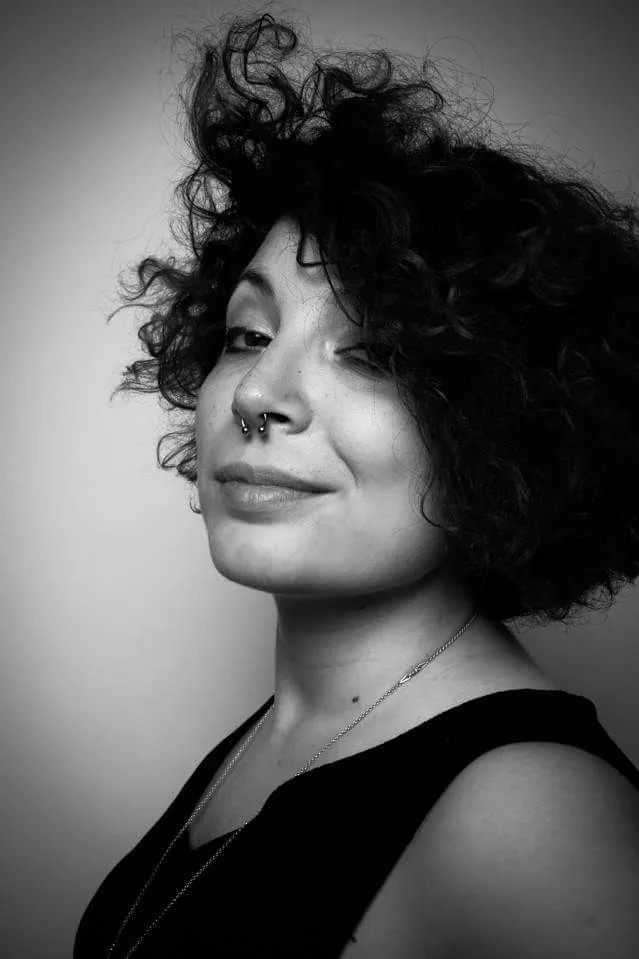
A Goldsmith at Nine: A Conversation with Cadia Romano
What do you want to be?
Cadia Romano was nine when her father asked what she wanted to be, and she said goldsmith. He asked whether she knew what the word meant. She did. She is forty-three now, and she has never worked outside jewellery.
We called her at ten in the morning her time. She talked for nearly two hours about the bench, the screen, her parents and her students. Quotes are lightly edited for clarity.
The answer she never changed
The first answer was a child's. The second one arrived with a fever.
She was at the end of middle school in Benevento, sick at home, when her father came back from work with a small gift: a magazine of craft tutorials, knitting and crochet, and inside it a piece explaining how to make a silver ring at home. "I said, okay. This is my direction."
She wanted the art school after that. The art school was in Naples. She was young, her mother was frightened of the distance, and she went to a scientific high school instead. At sixteen she told her parents she would not finish it.
Her father's trap
Her father did not argue. He made a deal. Finish the high school, and every summer he would pay for a jewellery course. She spent years thinking she had won a concession. She now reads it differently. A summer course is small. A summer course lets a teenager get it out of her system.
"It started like a trap. But at the end, it was a trap for my parents."
Her mother took the strict role in the house. Then she bought fashion magazines, found the jewellery districts in them, and called workshops in Vicenza, Valenza, Arezzo and Florence, one shop at a time, asking for an unpaid internship and a room for a girl who needed to stay a month. She found several.
"I never had a problem about your career," her mother told her later. "Because I know you want to be a goldsmith. You will find another work. You are able to do it."
Twenty years of courses, then Bulgari
The training reads like a list because it was one. A wax carving course in Florence at sixteen, five days on a single domed ring, the metal version arriving by post months later. Two years of full-immersion training in southern Italy. A course in jewellery for the theatre, chosen because she loves opera. Five years as a goldsmith's assistant at a jewellery school. Internships in Florence, and more courses in Rome, London and Barcelona, each one paid for with money from the last job.
Then Bulgari called, and she moved to Rome for seven years. Four in jewellery product development, working across the whole range of industrial production, then three inside the high jewellery team, on unique pieces made by hand.
She did not want the technology when it arrived. "I was so unhappy, because I needed to use technology. Technology is so boring." Seven years later she had learned 3D modelling, 3D scanning and a range of 3D printers, and had changed her mind about what they were. "It is not a substitute for the traditional technique. It is another thing."
The invisible fight
There is an argument in her trade that she describes as a small daily war. On one side, traditional goldsmiths who say that a person who models in 3D is not really a goldsmith. On the other, digital goldsmiths who answer that you cannot model jewellery properly without the bench knowledge underneath it.
She sits in the middle, and her reason is practical. If you have never solved a problem physically at the bench, there is nothing to translate onto the screen. The knowledge does not appear because the software is open.
The same argument now repeats itself, one layer up, with her students. Some of them tell her the craft knowledge no longer matters because artificial intelligence can do it.
"It is not a magician. It is like a stupid box. You have to train it. If you don't have the knowledge, what kind of object will you get?"
She says the same about every tool she uses. A render is not a material dropped onto a shape, and a printer is not a button. She repeats the conversation she has had many times: I bought the machine and I cannot print. What is your process? I turn it on and wait.
One week at the bench, three days on the screen
Where the tools do help her, she is specific about it.
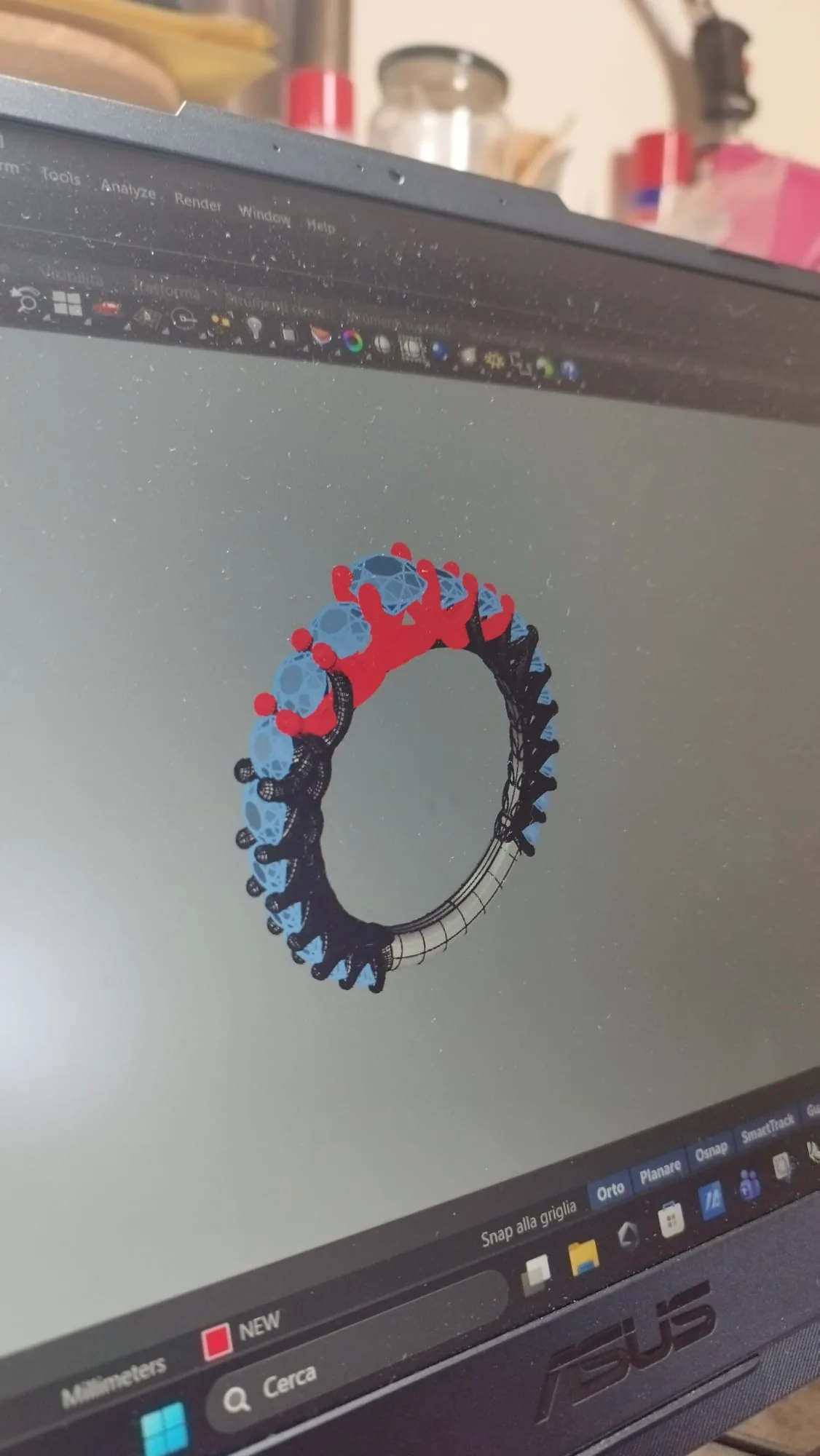
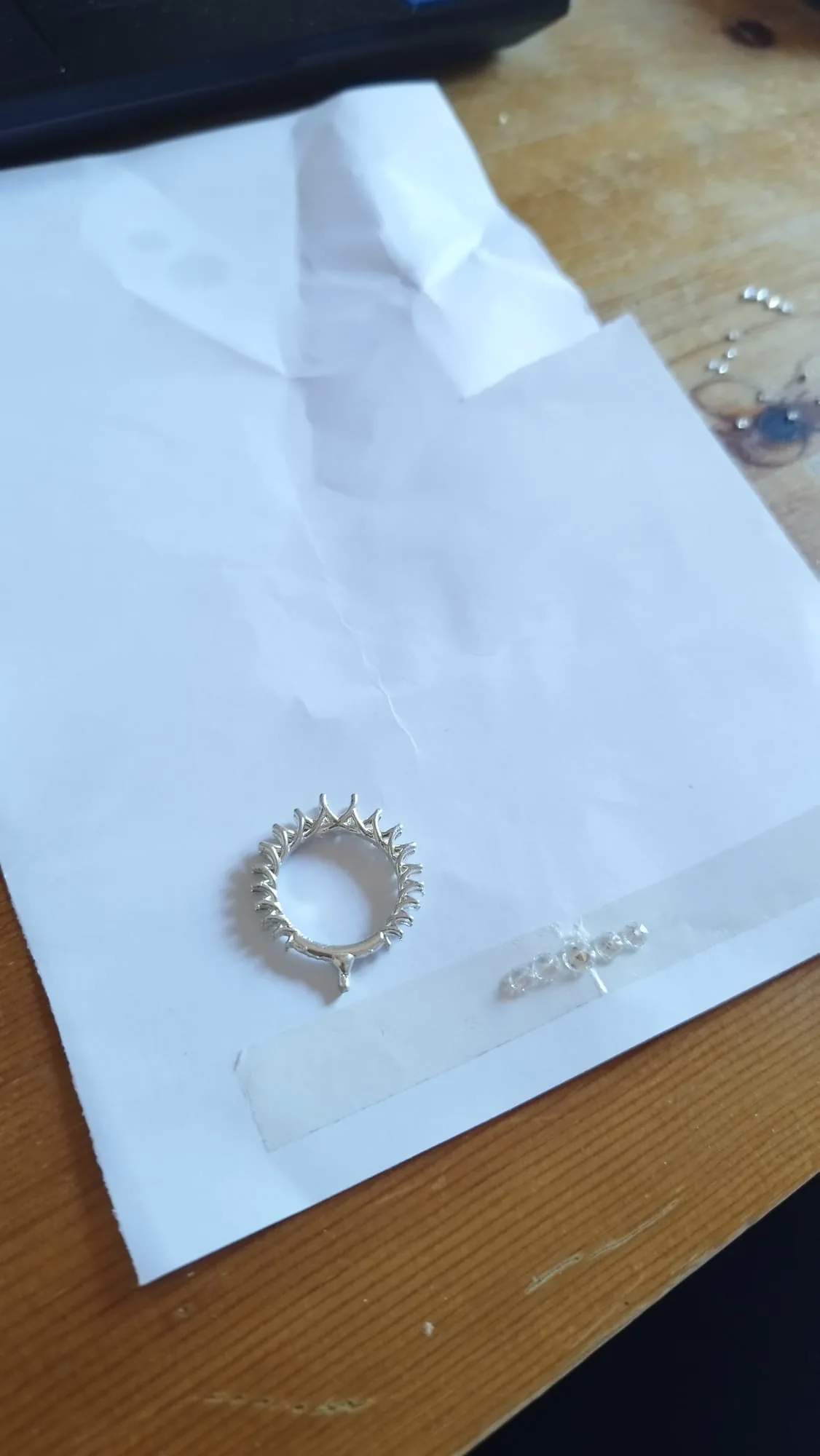
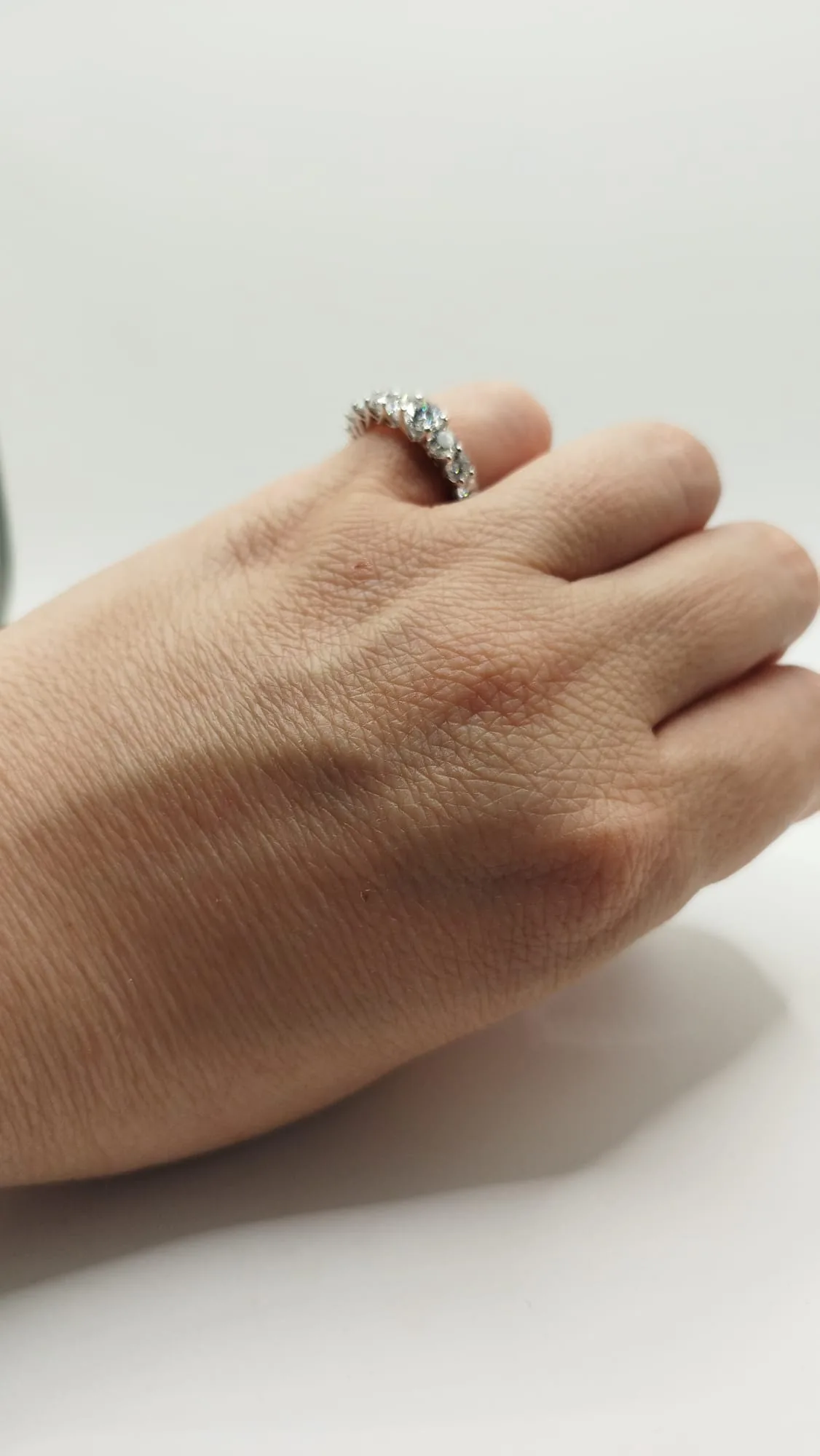
An engagement ring made entirely by hand can take her a week, because the piece may have to be split, a yellow gold shank and a platinum bezel cast separately, with waiting time between them. Modelled and printed, she can have the model, the images, and a physical object in the customer's hand in about three days.
The model
One line of the shape, and the rest of the project becomes visible.
The object
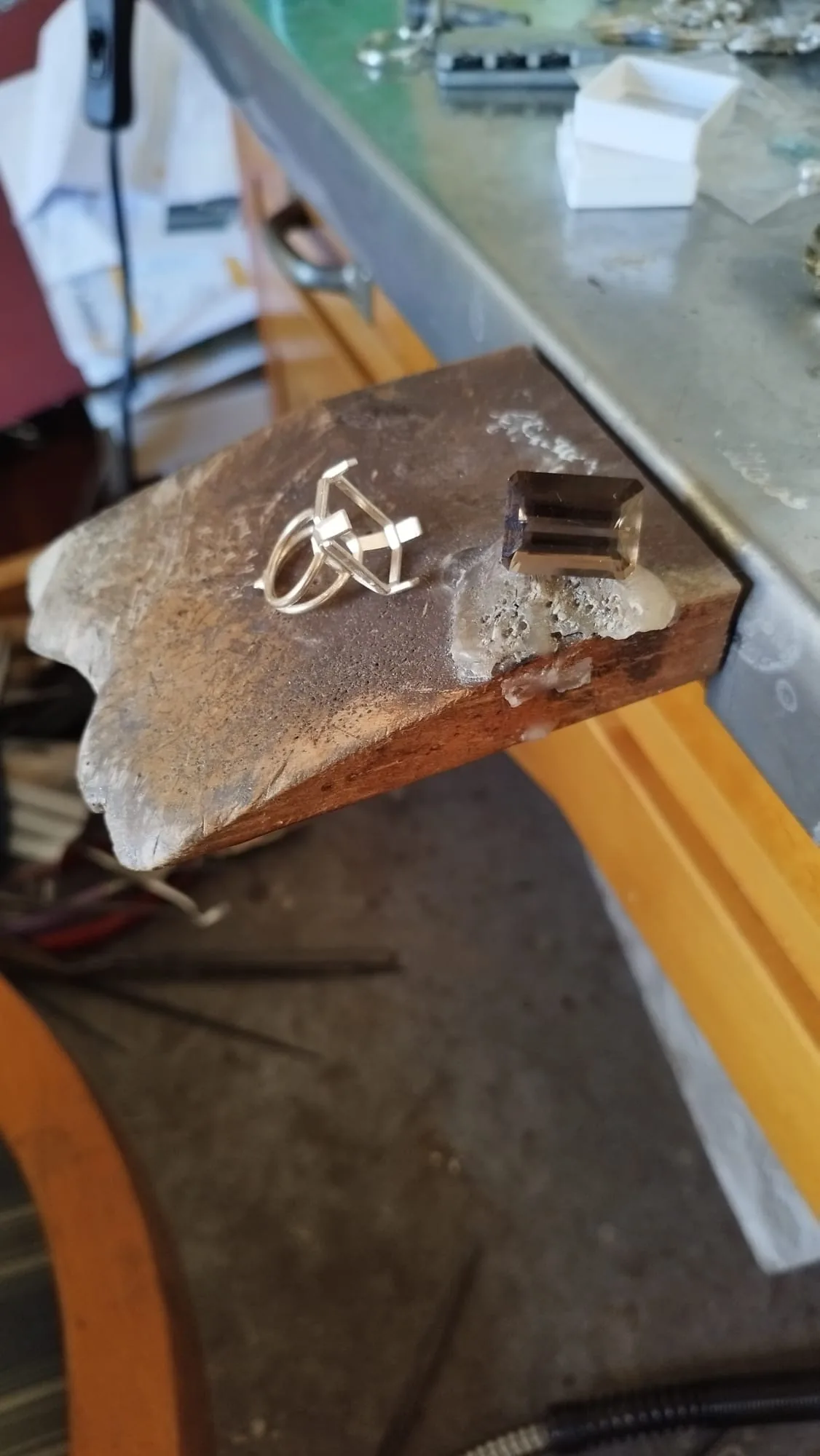
Cast, with the stones waiting beside it. Three days from the first line to a thing in the customer’s hand.
The bench
Set and finished. This part does not get faster, and she does not want it to.
That is time, not virtue, and she is careful about the difference. She still works at the bench, and she works there for reasons that have nothing to do with speed. "When I am stressed, I need to clean my mind. Stay focused on the object, work a lot with your hands." Forging, in particular. "When you are angry, if you want to kill someone, go to the workshop and forge something. You will be fine at the end of the process."
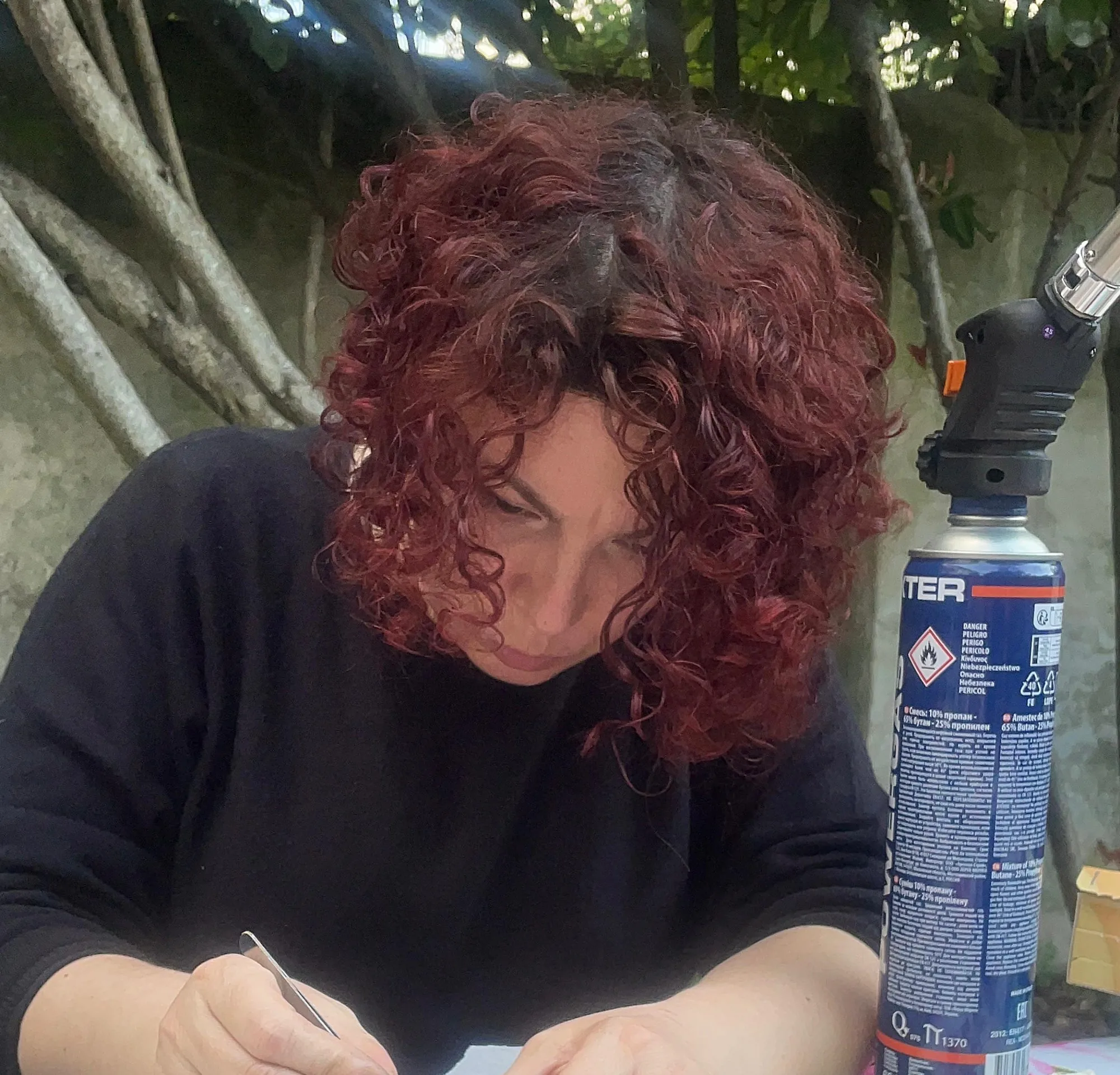
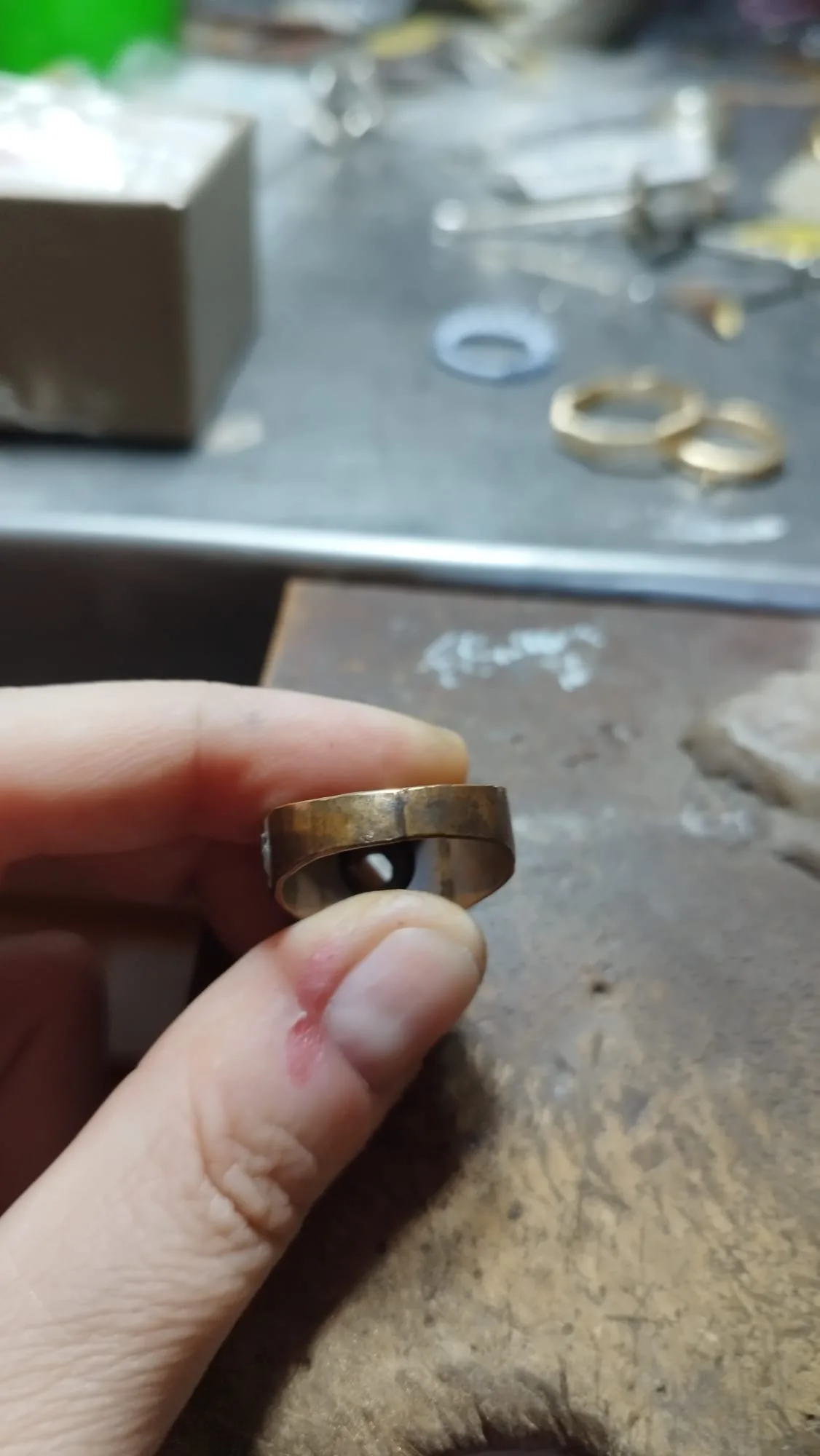
The bench also carries an obligation the screen does not. On screen, a problem is a control point on a line. On the bench, an old ring brought in for resizing may have been repaired during the war years with something that was not gold, and heating it can destroy the metal for good. Before she touches a piece like that, she photographs and films it, so the customer can see what was already there.
Ask her how she handles pressure and she says first that it costs her sleep. Then she gives the rule she has arrived at after twenty years.
"The fastest solution is not the best solution. This is my mantra."
Her method is small first steps. Open the software and draw one line of the shape, and the rest of the project becomes visible. At the bench it looks the same: a ring full of diamonds has to be resized, the student panics, and the first move is not a solution but a question. How do we protect the stones? Water, sand, thermal paste, perhaps all three. "If we resize the real importance of the problem, we can find a solution."
Where the designs come from
It depends on who the work is for. For a company, the style is a rail and you do not leave it. For private clients, who come to her mostly for wedding bands and engagement rings, her instinct is to break the default of platinum, white gold and diamond. "In the past we did not use only these three elements."
For her own small brand, started last year in whatever hours are left, it begins with nature. Leaves, flowers, fruit, captured by 3D scan or by mould. Then the second half of the idea arrives, which is mechanical: how the object splits, how it moves, what it weighs, what it will cost. She traces that back to two years she spent in mechanical engineering, fascinated by tolerances and motors. A necklace of four hundred linked pieces needs the same arithmetic. Aluminium cannot be soldered to silver, so the joint becomes a pin, and the pin becomes the design.
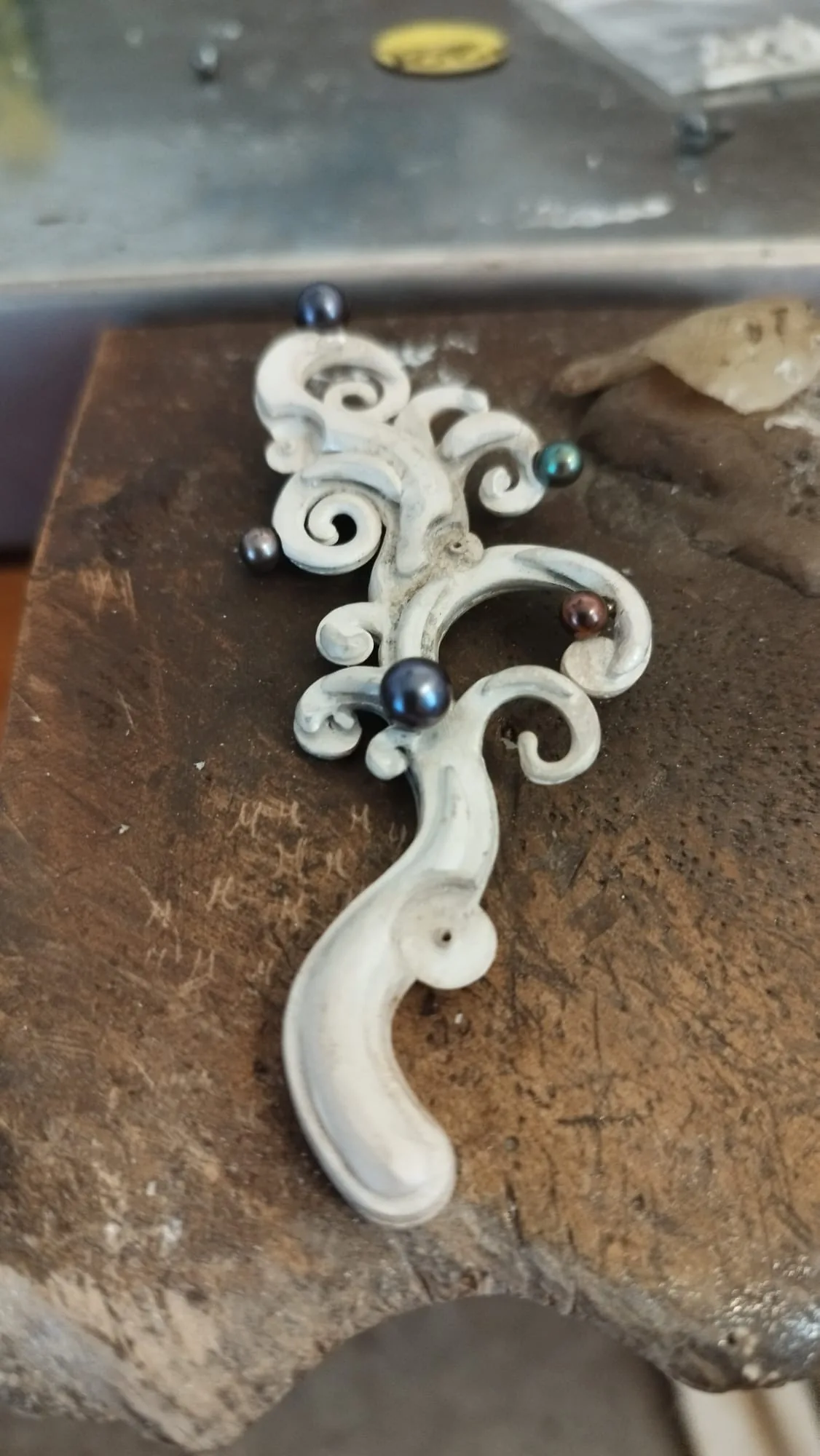
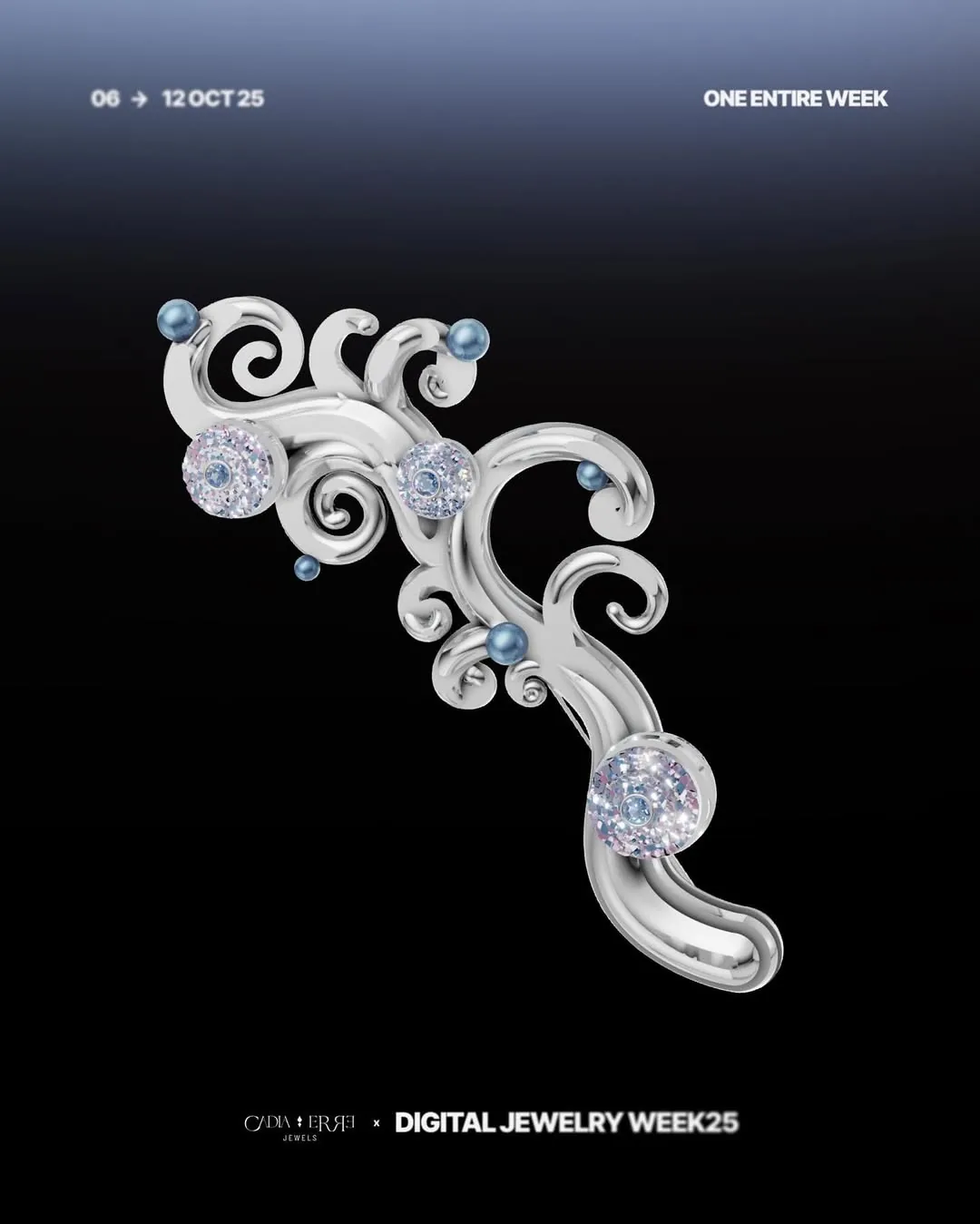
The file
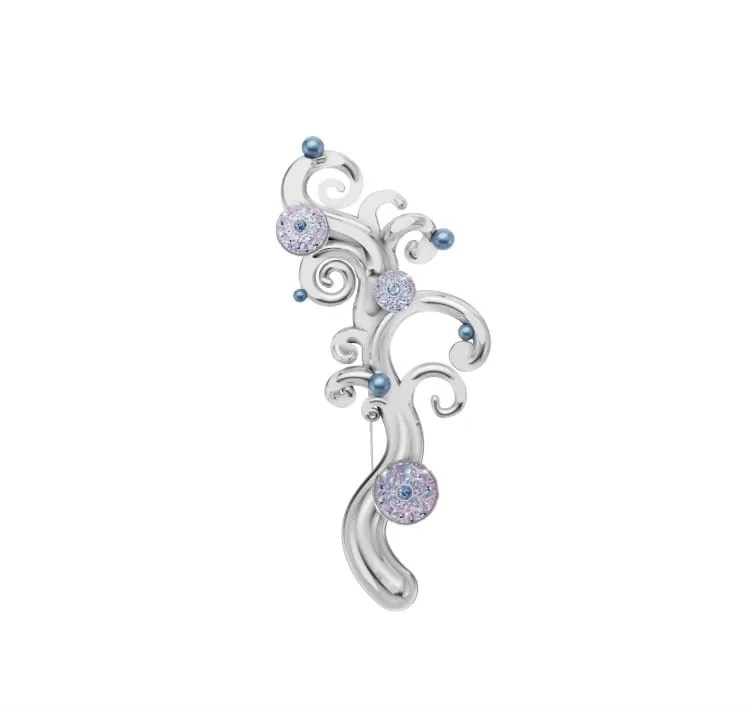
A render of one of her own pieces, before anything is cast.
The thing
The same piece on the bench, finished.
On the poster
The piece on the poster for Digital Jewelry Week 2025.
What she teaches
For four years she has been the jewellery design coordinator at a design academy with campuses in Rome and Florence, running a bachelor's in jewellery design and a master's in contemporary jewellery.
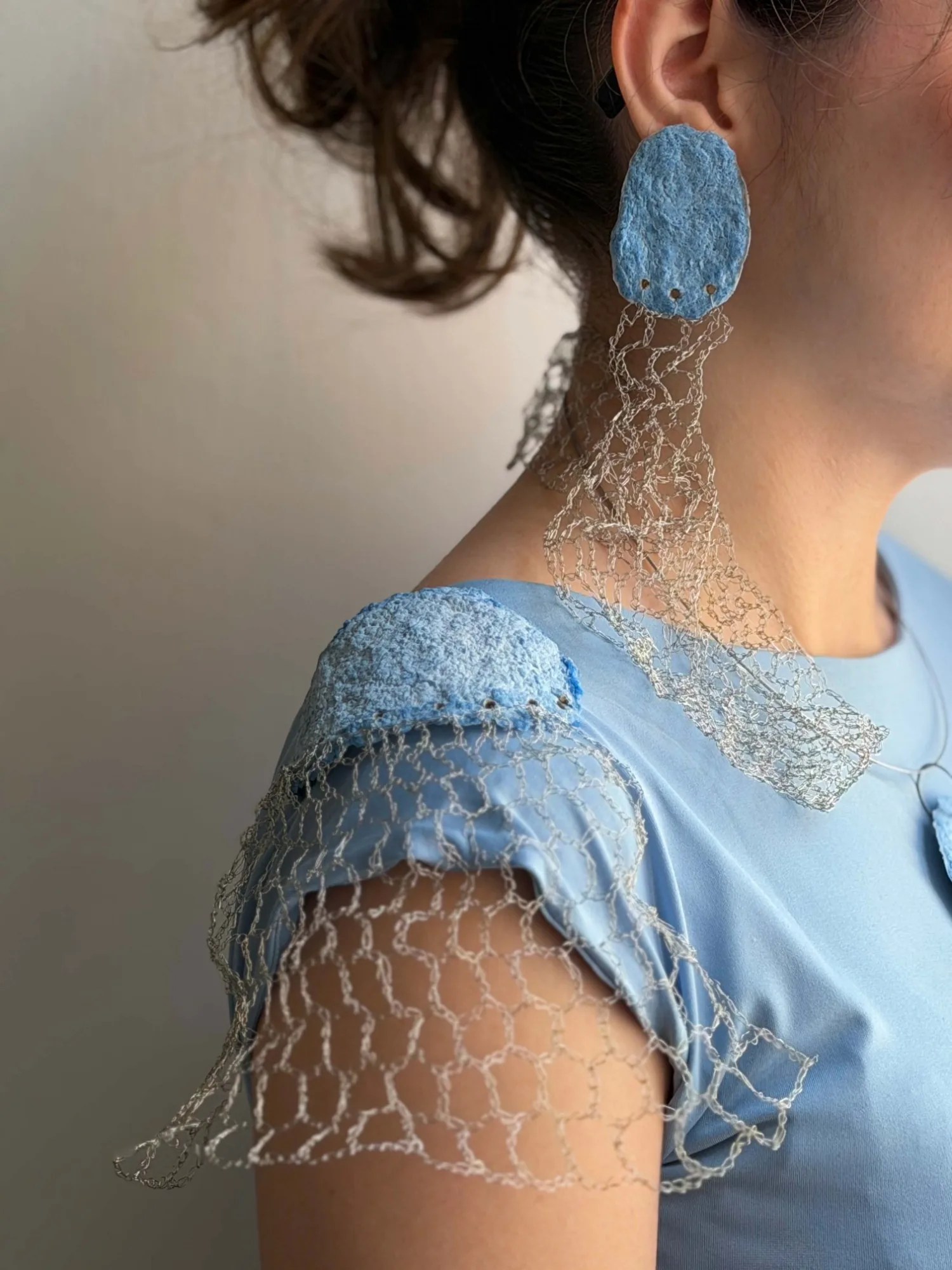
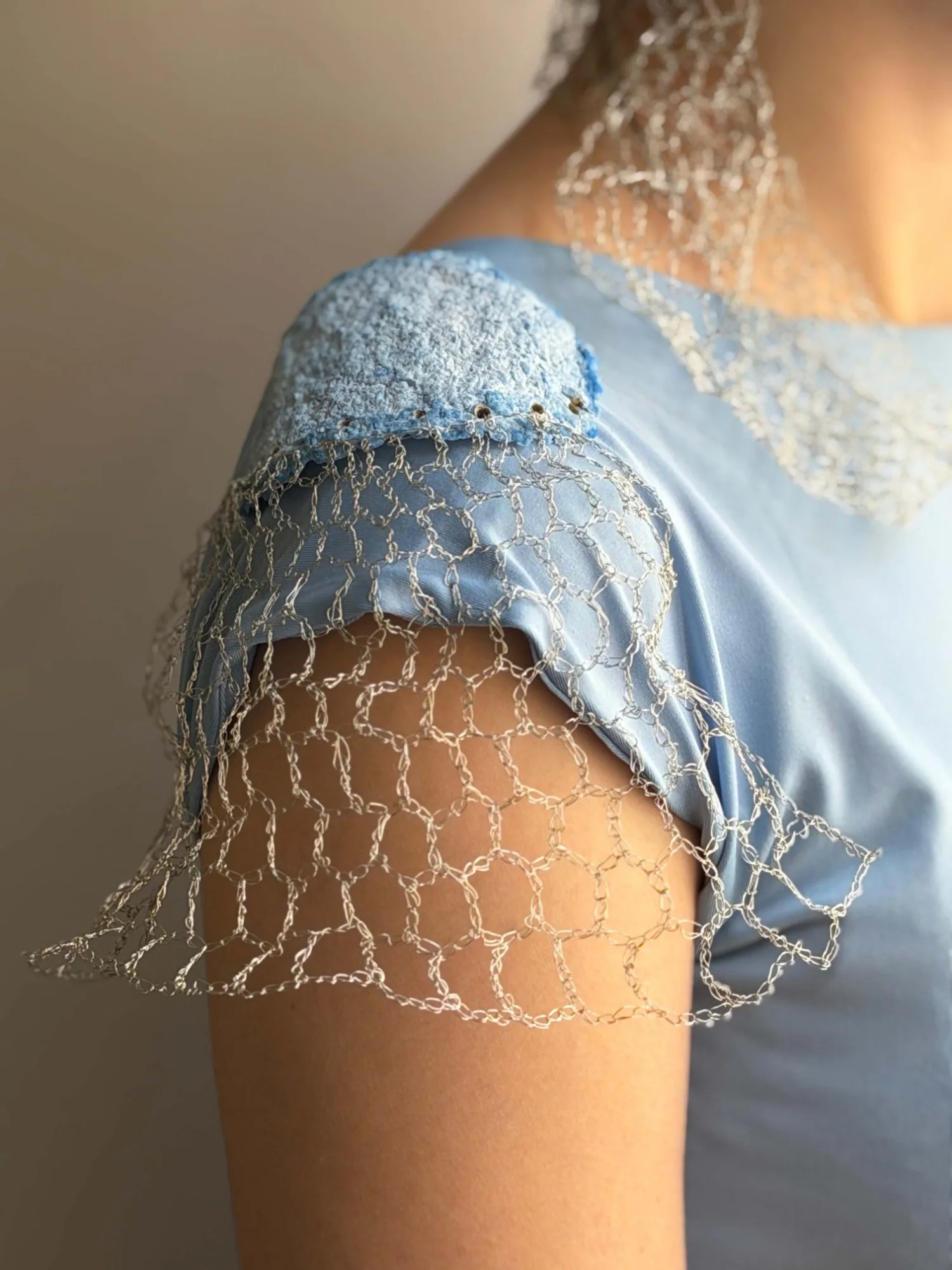
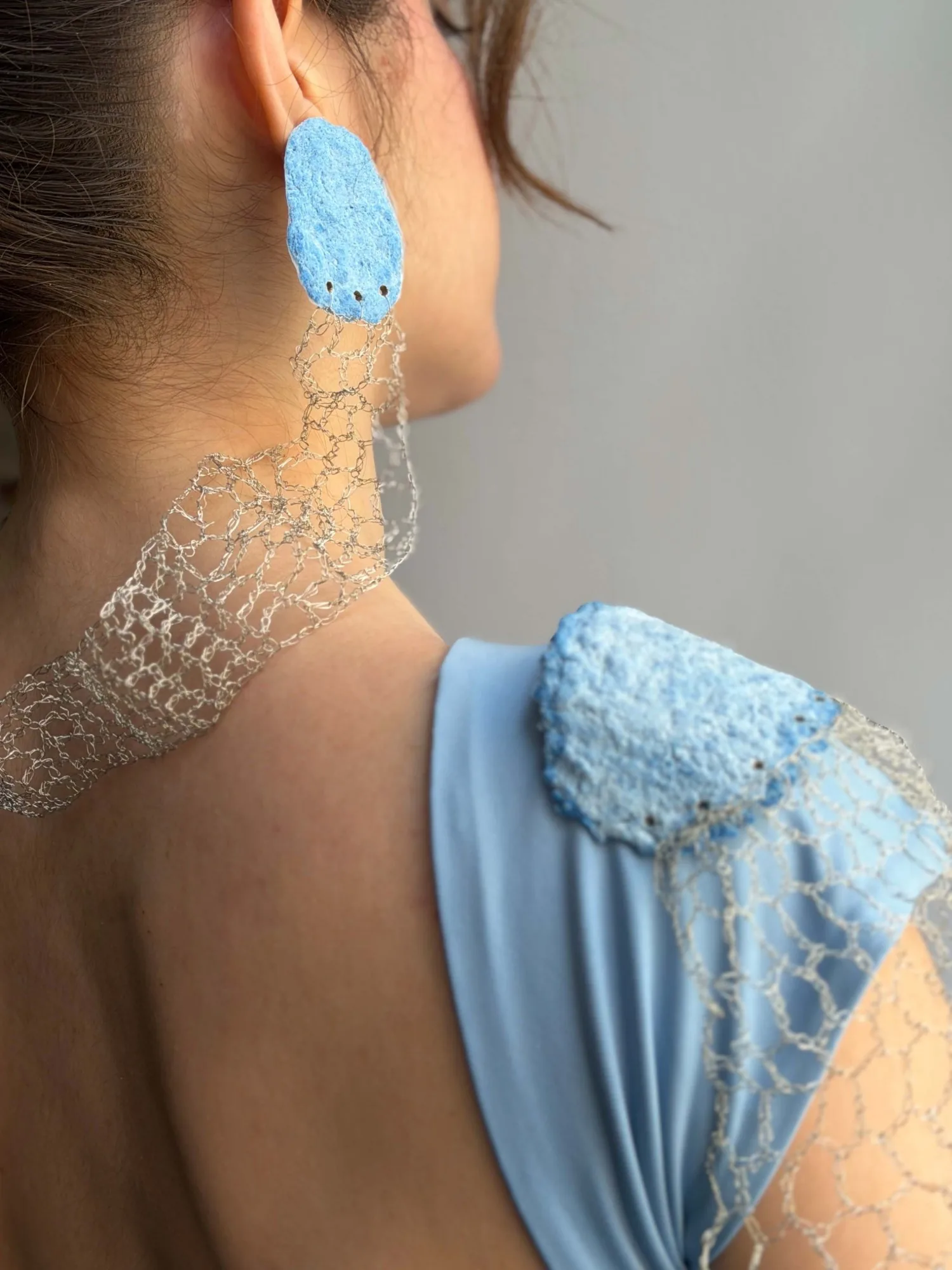
The bachelor students arrive from every kind of school, so the course starts at zero: what a jewel is, what the tools are, then 3D modelling and printing from the second year. The final collection has to be a set of files that would actually print, with correct seats for the stones and correct prong dimensions. In the third year she teaches metallic textiles, partly to break the assumption that jewellery is gold and diamonds, partly because a woven metal bracelet still has to survive a wrist. The master's programme starts from the other end, with cement, or food, or waste, and one hard requirement. The material has to mean something.
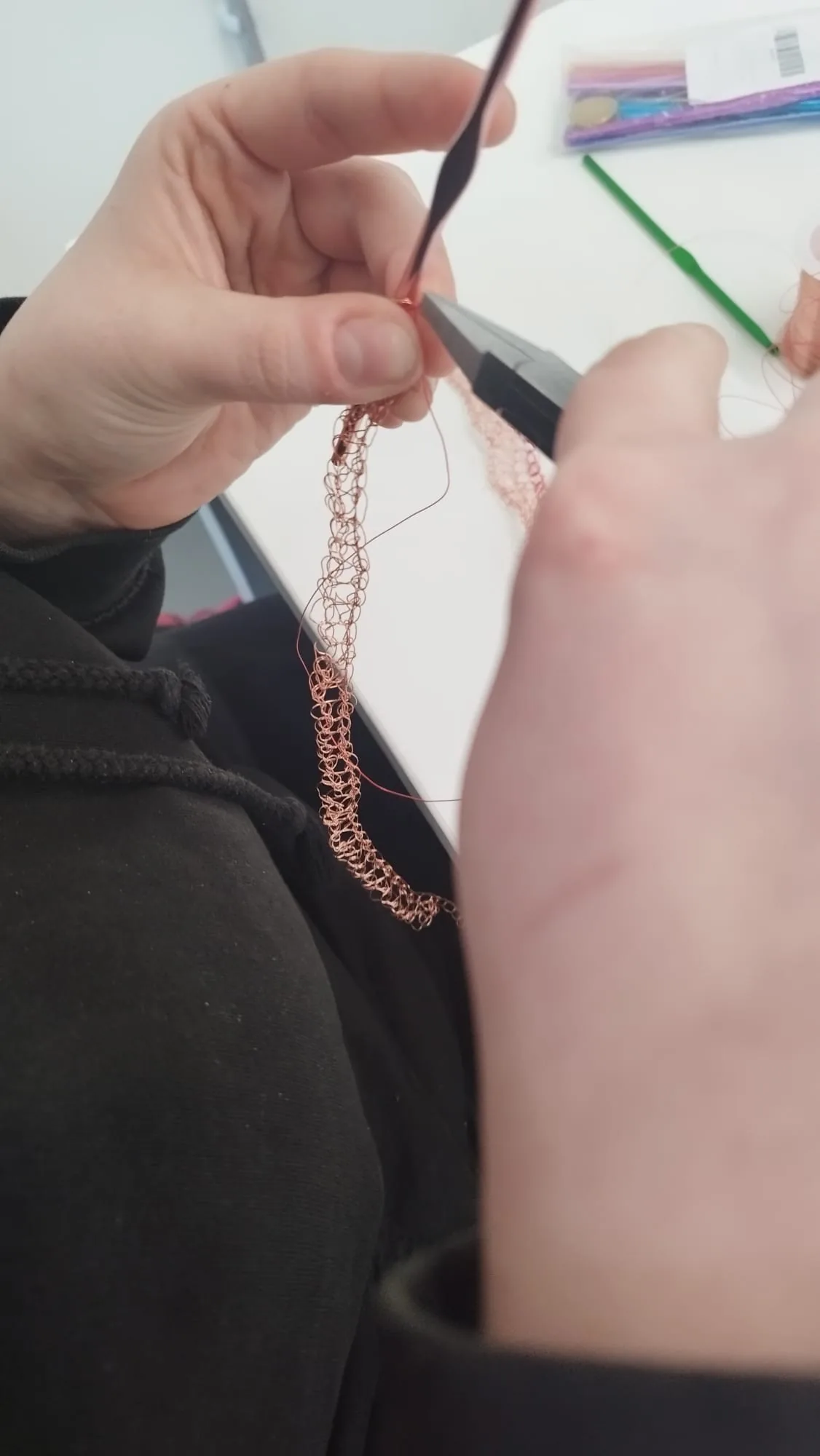
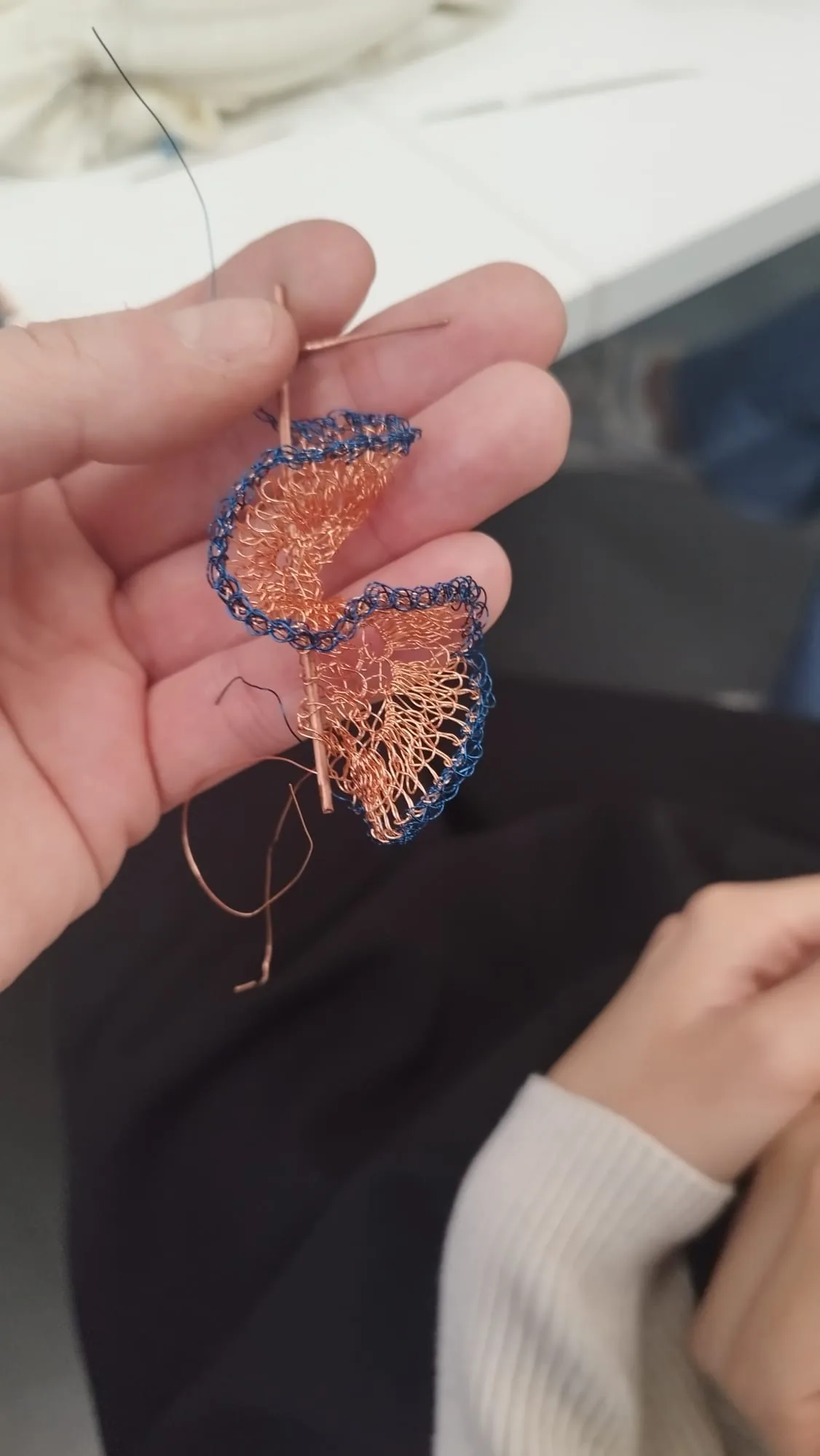
Wire and a hook
Metallic textiles start with copper wire and a crochet hook.
The piece takes shape
Crocheted copper with a blue edge, still on the hook.
Worn
The same technique as a set: an earring, a collar and a shoulder piece. A textile in metal still has to hold its shape.
Her advice to students is unfashionable and she knows it: study. Nobody wakes up as an engineer, she says, because a bad bridge kills people. A bad ring only finds someone with equally bad taste. So the field fills with people who skipped the reading, and it shows: ten designers, nine identical ideas. The cure she prescribes is history, and other people's history in particular. Look at the three houses at the top of the trade, she says, and you find three completely different obsessions underneath them: sculpted dancers in one, animals in another, coloured stones in the third. All three studied their way there.
And if the bench turns out not to be your place, that is information, not failure. Jewellery is also modelling, rendering, production engineering, packaging, photography. One of her students finished the whole training, decided she wanted to create collections and never sit at a bench, and found a craftsman to work with. "Why hurt yourself doing something that does not give you happiness?"
A file and a thing
Ask Cadia what she makes and the answer is both: a file and a thing. Here is the file. Drag it.
A week by hand, or three days on the screen. The ring above is the three-day half of that sentence: the part a customer can turn on a screen.
The other half never got faster, and she does not want it to. The seat for the stone, the prong, the joint that cannot be soldered: that knowledge came from the bench, and the screen only translates it.
The nine-year-old’s answer has now survived a scientific high school, a compromise with her father, five cities, seven years in a maison, a technology she did not want, and students who think a machine can skip the part she spent twenty years learning. She still describes herself the same way she did at the start of the call. Obsessive about jewellery. Every kind of it.